

Best Greenhouse Kits for Home Gardeners: 2026 Guide
Table of Contents
- Best Greenhouse Kits for Home Gardeners: Top Picks
- Quick Comparison Table: Greenhouse Kits at a Glance
- Polycarbonate Greenhouse Kits: Why They're the Smart Choice
- Mini Greenhouse Kits for Small Spaces & Tight Budgets
- Greenhouse Kits for Cold Weather: Year-Round Growing
- Essential Greenhouse Accessories to Enhance Your Setup
- Foundation, Permits & Site Preparation: What You Need to Know
- How to Choose the Right Greenhouse Kit for Your Home
Best Greenhouse Kits for Home Gardeners: 2026 Guide
Last Updated: July 23, 2026
When home gardeners invest in a greenhouse, they extend their growing season by months and protect plants from unpredictable weather. The best greenhouse kits combine durability, ease of assembly, and practical features without requiring professional installation. At Rooms Outdoors, we curate premium outdoor living solutions that help homeowners create functional backyards, with greenhouse kits central to that vision. The right kit transforms your gardening capacity and confidence.
The challenge is finding one that matches your space, climate, and skill level without overspending. This guide covers top-rated options, explains why polycarbonate panels are superior, and shows you how to evaluate size, ventilation, and foundation requirements before you buy.
Best Greenhouse Kits for Home Gardeners: Top Picks
Rooms Outdoors 10x18 Ft Polycarbonate Greenhouse with Rain Gutter & 4 Roof Vents
This standout choice offers 180 square feet of growing area for serious home gardeners. The aluminum frame resists rust and requires zero maintenance, while polycarbonate panels deliver 100% UV protection and superior light transmission. The integrated rain gutter system channels water away and prevents pooling that damages foundations. Four roof vents enable passive temperature control, open them on warm days to prevent heat stress, close them at night to retain warmth.
Assembly takes a full weekend for one person, but instructions are clear and the modular design allows staged completion. This model handles significant snow loads (up to 30 pounds per square foot) while remaining affordable at $2,059.00, 40% less than comparable walk-in models from premium brands.
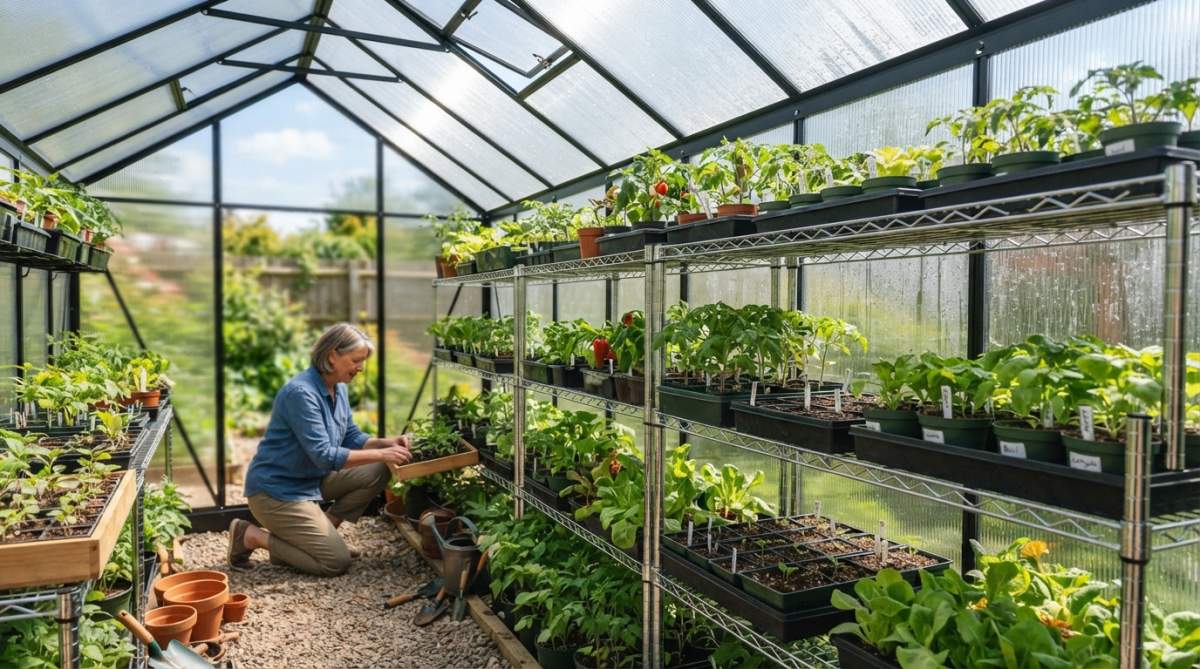
Best for: Gardeners with 400+ square feet of available yard space who want to grow multiple plant types year-round.
Standout feature: Integrated rain gutter system prevents water damage and extends frame lifespan.
Rooms Outdoors 12x8 Ft Walk-In Polycarbonate Greenhouse
This 96-square-foot walk-in model delivers functionality for limited spaces. The A-frame design provides adequate headroom (approximately 6.5 feet at peak), and the aluminum frame with polycarbonate glazing offers the same durability as larger models. At $629.00, this is the most affordable option without sacrificing construction quality.
The walk-in design matters: you can move around inside, tend plants comfortably, and work during rain or harsh sun. The single door with magnetic closure seals efficiently, and the included roof vent provides adequate air circulation. The trade-off: it's tight for two people working simultaneously, and large tools or equipment won't fit inside.
Best for: Apartment dwellers with patios, townhome gardens, and anyone testing greenhouse gardening before committing to larger structures.
Standout feature: Walk-in access at this price point is rare; most competitors charge $900+ for comparable footprint.
Rooms Outdoors 6x12 Ft Walk-In Polycarbonate Greenhouse with Sliding Door & Adjustable Roof Vent
This compact 72-square-foot model is purpose-built for seed starting and seasonal plant protection. The sliding door saves space when fully opened and moves smoothly on aluminum tracks. The adjustable roof vent lets you control airflow precisely, critical in compact spaces where temperature swings are dramatic.
At $569.00, this sits between hobby models and serious setups. Many gardeners use this size as supplemental structure for seeds and propagation. The footprint (6 feet wide, 12 feet long) fits standard residential lots without dominating the landscape.
Best for: Seed starters, propagation specialists, and gardeners with limited space who want professional-grade ventilation control.
Standout feature: Sliding door mechanism prevents wind stress on hinges and saves 3 square feet of clearance space.
Quick Comparison Table: Greenhouse Kits at a Glance
| Model | Footprint | Price | Best For | Key Advantage |
|---|---|---|---|---|
| 10x18 Ft Polycarbonate | 180 sq ft | $2,059.00 | Year-round, multi-crop growing | Rain gutter system, 4 roof vents |
| 12x8 Ft Walk-In | 96 sq ft | $629.00 | Small yards, couples | Walk-in access, affordable price |
| 6x12 Ft Walk-In | 72 sq ft | $569.00 | Seed starting, propagation | Sliding door, adjustable vent |
Polycarbonate Greenhouse Kits: Why They're the Smart Choice
Polycarbonate panels have become the standard for residential greenhouse kits, replacing glass and polyethylene film. The material transmits 90% of available light while filtering harmful UV radiation that damages delicate seedlings. Single-wall panels are lightweight and affordable; twin-wall panels provide superior insulation for cold climates.
The critical advantage: polycarbonate is virtually unbreakable. A baseball, hail, or falling branch won't shatter it like glass. This matters in regions prone to severe weather or where children and pets are nearby. UV-stabilized panels resist yellowing for 10+ years, maintaining light transmission and aesthetic appeal.
One limitation: polycarbonate doesn't offer the visual clarity of glass. It diffuses light slightly, which actually benefits plants by reducing hot spots and stress. Over 12-15 years, panels may develop slight haze, though this doesn't significantly impact plant growth.
Twin-wall polycarbonate provides R-value insulation (typically R-1.5 to R-2.0), meaning 30-40% lower heating costs during winter for gardeners in USDA zones 5 and colder. The air pockets trap heat and reduce condensation that promotes fungal disease.
Galvanized steel or aluminum frames are equally durable. Aluminum requires zero maintenance and won't rust. Steel is heavier (more stable in high winds) but needs periodic inspection for corrosion, especially in coastal regions. Both last 20+ years when properly installed.
Mini Greenhouse Kits for Small Spaces & Tight Budgets
Mini greenhouses, typically 4x6 feet or smaller, solve space constraints without requiring building permits in most jurisdictions. These compact models excel at seed starting, hardening off seedlings, and protecting tender perennials during winter.
Shelf-style mini greenhouses (typically 4 tiers, 27x19 inches footprint) cost $110-$300 and assemble in under an hour. They work best on patios or decks protected from direct wind. Polyethylene covers degrade in 2-3 years, but replacement covers cost $20-$40.
Walk-in mini greenhouses (4x6 or 6x8 feet) offer better durability and usable space. At $300-$600, they provide enough room to move around while tending plants and accommodate standard shelving or bench systems. These models handle wind better than shelf units.
The real advantage: low commitment and reversibility. If greenhouse gardening doesn't match your workflow, you can relocate or repurpose the structure without significant loss.
Greenhouse Kits for Cold Weather: Year-Round Growing
Cold-climate gardeners need ventilation control, insulation, and supplemental heating to extend the season meaningfully. Twin-wall polycarbonate panels are non-negotiable for zones 5 and colder. Single-wall alternatives lose heat too rapidly, making winter heating costs prohibitive. Twin-wall panels reduce heat loss by 30-40% and minimize condensation that promotes mold.
Automatic roof vents are essential for temperature management. These spring-loaded vents open when interior temperature exceeds 75°F, allowing hot air to escape without manual intervention. In spring and fall, when outdoor temperatures fluctuate 30+ degrees between day and night, automatic vents prevent heat stress.
A 4,000-watt greenhouse heater ($200-$400) maintains 50°F minimum temperatures in most climates. For passive heating, thermal mass (water barrels, stone, or concrete) absorbs daytime heat and releases it at night, reducing temperature swings by 10-15°F.
Foundation preparation is critical in cold climates. Frost heave (soil expansion from freezing) can shift an improperly anchored greenhouse 2-4 inches over a winter, stressing the frame and causing roof leaks. Install foundation footings below the frost line (12-48 inches depending on your region) or use adjustable piers that accommodate seasonal movement.
Essential Greenhouse Accessories to Enhance Your Setup
A bare greenhouse is just a structure. Accessories transform it into a functional growing environment. Shelving systems maximize vertical space. Standard 4-tier aluminum shelving units ($150-$300) fit inside most walk-in models and double your growing capacity. Metal shelves resist rot and rust better than wood and are adjustable to accommodate plants of different heights.
Shade cloth (30-50% density) prevents heat stress during peak summer, reducing interior temperatures by 10-15°F while maintaining adequate light. Retractable shade systems ($200-$400) let you adjust coverage based on season and weather.
Digital thermometers and hygrometers ($15-$50) provide critical environmental data. Many include wireless sensors and high/low alarms that alert you to temperature or humidity extremes. Maintaining 40-60% humidity and 60-80°F daytime temperatures prevents most common plant diseases.
Propagation mats ($30-$80) maintain soil temperature 10-15°F above ambient, dramatically improving seed germination rates. For seed starters, this single accessory often increases success rates by 30-50%.
A basic drip irrigation system ($50-$150) delivers water directly to plant roots, reducing disease pressure and conserving water. Timer-controlled systems ($80-$200) enable vacation watering without manual intervention.
Foundation, Permits & Site Preparation: What You Need to Know
A greenhouse is typically classified as a "temporary structure" or "accessory building" under residential zoning codes, often exempt from building permits if under 120 square feet and not permanently attached to the house. However, requirements vary dramatically by jurisdiction.
Contact your local building department BEFORE purchasing. Ask about:
- Permit requirements
- Setback distances (how far from property lines)
- Height restrictions
- Foundation requirements
- Electrical requirements (if installing heaters, fans, or lighting)
Most jurisdictions classify greenhouses as exempt if under 200 square feet, not permanently anchored, and located in the rear yard. But verify this for your location.
Site preparation determines long-term success. Choose a location with:
- Full sun exposure (minimum 6 hours direct sunlight, ideally 8+ hours)
- Good drainage (avoid low spots where water pools)
- Wind protection (trees or structures on the north side reduce heating costs)
- Access to water (within 50 feet of a hose connection)
- Level ground (within 1 inch over the entire footprint)
Level your site before assembly. A 2-inch-thick gravel base (tamped down) provides drainage and creates a level surface.
Foundation options depend on climate and permanence:
- Gravel base ($0-$50): Adequate for temporary structures in mild climates
- Concrete pad ($200-$500): Poured 4 inches thick, 6 inches below frost line, provides permanent anchoring
- Adjustable piers ($150-$300): Accommodate seasonal movement; excellent for cold climates
In cold climates (USDA zones 5 and colder), frost footings are non-negotiable. Install footings below the local frost line, typically 24 inches in zone 6, 36-48 inches in zones 4-5.
If installing heaters, exhaust fans, or grow lights, you'll need 240V service (for heaters) or 120V circuits (for fans and lights). Hire a licensed electrician for this work.
How to Choose the Right Greenhouse Kit for Your Home
Selecting the right kit requires honest assessment of three factors: available space, climate, and intended use.
Space assessment: Measure your available yard area. Account for setback distances required by local code (typically 5-10 feet from property lines). Position the greenhouse so its shadow falls on unused areas (north side is ideal). Walk the site at different times of day to confirm sun exposure. A greenhouse in shade for 4+ hours daily won't support productive growing.
Climate evaluation: Know your USDA hardiness zone and typical winter low temperatures. Zones 6 and warmer can use single-wall polycarbonate. Zones 5 and colder need twin-wall polycarbonate and supplemental heating. Research your region's typical wind speeds; coastal areas need heavier-gauge frames.
Use case definition: Are you starting seeds (requires 72-96 square feet minimum), growing food year-round (needs 120+ square feet), or protecting tender plants seasonally (can work with 60+ square feet)? Seed starters benefit from shelving and propagation mats. Year-round food growers need ventilation, heating, and bench space.
Many experienced gardeners start small (6x8 feet) to test the concept, then upgrade to larger models. This approach costs more initially but prevents regret of buying a kit you won't maintain.
Material choice: polycarbonate panels with aluminum frames are the standard for good reason. They're durable, low-maintenance, and provide excellent light transmission. Avoid polyethylene covers unless testing the concept on a tight budget.
Assembly reality check: expect 12-16 hours for a 10x18 kit with one person, 8-10 hours with two people. Have all tools ready and don't rush. Poor assembly causes frame stress, sticking doors, and roof leaks.
Transforming your backyard into a year-round growing space requires the right structure, proper site preparation, and realistic expectations about maintenance. The Rooms Outdoors greenhouse kits deliver durable construction and thoughtful features, rain gutters, multiple roof vents, and polycarbonate panels that balance light transmission with insulation. Whether you choose the spacious 10x18 model for serious cultivation or the compact 6x12 for seed starting, you're investing in extended growing seasons and protection from unpredictable weather. Start with honest assessment of your space, climate, and intended use, prepare your site properly, and verify local permit requirements. The right greenhouse kit becomes a centerpiece of your outdoor living space. Shop the Rooms Outdoors collection today and begin building your ideal backyard retreat.
Frequently Asked Questions
What is the best greenhouse kit for a beginner?
For beginners, the Rooms Outdoors 6x12 Ft Walk-In Polycarbonate Greenhouse ($569) is an excellent starting point. It offers walk-in convenience, a sliding door for easy access, and an adjustable roof vent for temperature control. Polycarbonate greenhouse kits like this provide UV protection and durable construction without requiring extensive maintenance. The compact size is manageable for most backyards, and the straightforward assembly makes it beginner-friendly.
Do greenhouse kits need a foundation?
Yes, a proper foundation is critical for greenhouse stability and longevity. Most greenhouse kits require either a concrete pad, gravel base, or galvanized steel foundation kit to anchor the frame and prevent shifting. A level foundation prevents water pooling, protects against wind damage, and extends the life of your structure. Before purchasing, verify your kit's foundation requirements and check local zoning regulations, as some jurisdictions require permits for permanent structures.
What's the difference between polycarbonate and glass greenhouse panels?
Polycarbonate greenhouse kits offer superior impact resistance, better insulation (especially twin-wall options), and UV protection without the fragility of glass. Polycarbonate panels are lighter, easier to install, and more affordable. Glass provides maximum light transmission but breaks easily, requires more maintenance, and offers less insulation. For most home gardeners, polycarbonate is the practical choice for durability and year-round growing efficiency.
How much does a quality greenhouse kit cost?
Quality greenhouse kits for home gardeners range from $569 to $2,059+. The Rooms Outdoors 6x12 Ft model starts at $569, the 12x8 Ft at $629, and the premium 10x18 Ft at $2,059. Budget-friendly mini greenhouse kits start lower, while premium options with advanced features cost significantly more. Consider long-term value: investing in durable polycarbonate and aluminum construction reduces heating and maintenance costs over time.
What greenhouse accessories are essential for success?
Key greenhouse accessories include automatic roof vents for temperature control, shelving units for maximizing growing space, ventilation fans, thermometers, and shade cloth for summer heat management. Rain gutters (included in many kits) direct water for collection and drainage. Heaters extend growing seasons in cold climates. Start with basics like vents and shelving, then add specialized accessories as your gardening expands. Quality accessories enhance both plant health and ease of management.
This article was written using GrandRanker