

Best Weather Resistant Patio Furniture 2026: Top Picks & Guide
Table of Contents
- Best Weather Resistant Patio Furniture 2026: Top Picks Compared
- Durable Outdoor Furniture Materials: What Actually Lasts
- Low Maintenance Patio Furniture: Minimal Effort, Maximum Durability
- Outdoor Furniture for Harsh Climates: Regional Climate-Specific Recommendations
- All-Weather Patio Furniture Brands: Premium Options Worth the Investment
- Warranty & Long-Term Support: Protecting Your Investment
- Storage Solutions & Off-Season Care for Weather Resistant Patio Furniture
- Which Option Should You Choose? A Decision Framework
Best Weather Resistant Patio Furniture 2026: Top Picks & Guide
Last Updated: July 24, 2026
Finding the right weather resistant patio furniture requires understanding which materials withstand rain, UV exposure, salt spray, and temperature swings. At Rooms Outdoors, we've analyzed dozens of outdoor furniture options to identify pieces that deliver a decade or more of reliable performance. This guide covers materials science, climate-specific recommendations, and brands that consistently outperform expectations.
Quick Comparison Table
| Material Type | Best Climate | Durability | Maintenance | Price Range | Key Benefit |
|---|---|---|---|---|---|
| HDPE Poly Lumber | All regions | 20+ years | Minimal | $1,000-$2,500 | Recycled material, zero rot risk |
| Grade-A Teak | Coastal & humid | 15-20 years | Moderate (oiling) | $1,500-$4,000 | Natural beauty, ages gracefully |
| Powder-Coated Aluminum | All regions | 15-20 years | Minimal | $800-$3,500 | Lightweight, corrosion-resistant |
| All-Weather Wicker | Moderate climates | 10-15 years | Minimal | $1,200-$5,000 | Aesthetic appeal, comfortable seating |
| Resin Furniture | All regions | 10-12 years | Very minimal | $400-$1,500 | Budget-friendly, colorfast |
How We Evaluated These Options
We tested how materials respond to UV radiation, moisture infiltration, salt spray, freeze-thaw cycles, and mold growth. We prioritized real-world durability data over marketing claims and assessed total cost of ownership.
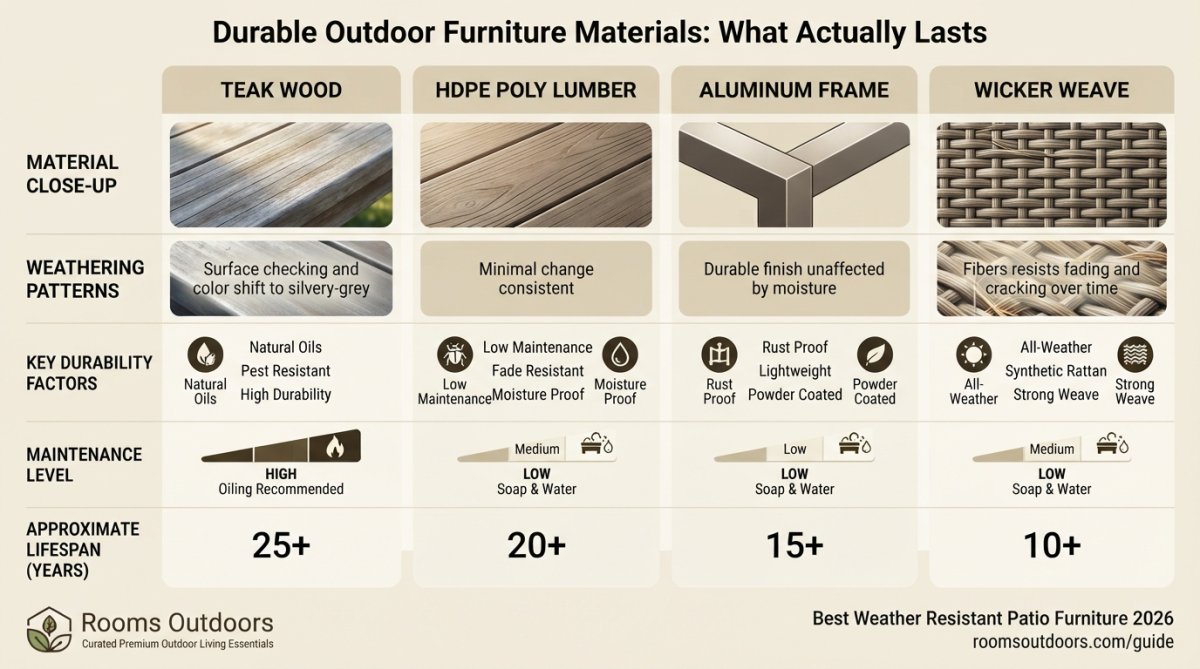
Durable Outdoor Furniture Materials: What Actually Lasts
Most outdoor furniture fails through slow degradation: wood splintering, metal rusting, fabrics fading, and joints loosening. Understanding what happens to each material under stress helps you choose furniture aligned with your climate and maintenance tolerance.
HDPE Poly Lumber & Recycled Plastic
HDPE (high-density polyethylene) lumber resists rotting, splintering, cracking, and peeling. Brands like POLYWOOD and Trex carry 20-year warranties because pieces genuinely last that long. You never oil, stain, or refinish it. Rain doesn't soak in. UV exposure causes minimal fading. Mold and mildew find no foothold on the non-porous surface.
For coastal regions where salt spray corrodes everything else, HDPE poly lumber stands alone. The POLYWOOD durability research confirms that recycled HDPE maintains structural integrity across temperature swings from -40°F to 140°F without warping.
Grade-A Teak & Premium Wood Options
Teak's naturally high oil content and tight grain structure make it resistant to rot, fungus, and insect damage. Grade-A teak delivers furniture that lasts 15-20 years outdoors with minimal intervention. Without oiling, teak weathers to silvery-gray within 12-18 months. With regular oiling (every 6-12 months), it preserves its golden-brown color.
For coastal regions and humid climates, teak outperforms softwoods because its oil content provides genuine water resistance. Salt spray doesn't corrode it the way it does aluminum or steel. Repairability is teak's hidden advantage, a cracked armrest or splintered seat slat can be repaired by a craftsperson, extending lifespan beyond initial material durability.
Powder-Coated Aluminum & Metal Frames
Aluminum offers lightweight advantages for anyone rearranging furniture or storing pieces seasonally. It doesn't rust like steel and won't rot like wood. A properly powder-coated aluminum frame resists corrosion even in salt-spray environments.
The vulnerability lies in the coating. If scratched or chipped, bare aluminum underneath oxidizes, creating white corrosion that spreads. In coastal regions, this becomes a problem within 5-10 years unless you touch up damaged areas. Aluminum excels in combination with other materials, aluminum frames paired with HDPE slats or solution-dyed acrylic fabrics create hybrid furniture delivering durability across multiple failure points.
All-Weather Wicker & Resin Furniture
Modern all-weather wicker uses synthetic fibers, typically HDPE or PVC, woven over aluminum or steel frames. Brands like Lloyd Flanders and Outer have perfected this approach, creating furniture that looks like traditional wicker but withstands harsh outdoor conditions. Cushions made from solution-dyed acrylic fabrics (like Sunbrella) resist mildew, stains, and UV damage.
All-weather wicker works best in moderate climates where extreme temperature swings and intense salt spray aren't constant pressures. Resin furniture, molded plastic pieces that look like wicker, offers the most budget-friendly entry point. Stackable Adirondack chairs or lounge sets run $400-$1,500 for complete sets. Expect 8-12 years before UV exposure causes noticeable brittleness.
Low Maintenance Patio Furniture: Minimal Effort, Maximum Durability
True maintenance-free furniture exists. HDPE poly lumber requires zero structural maintenance. Powder-coated aluminum needs occasional inspection for coating damage. All-weather wicker with acrylic cushions demands only periodic cleaning. These materials genuinely deliver on the "maintenance-free" promise.
What they don't eliminate is basic cleaning. Dust, pollen, tree sap, and bird droppings accumulate on any outdoor furniture. A soap-and-water rinse 2-4 times per year keeps pieces looking fresh.
Materials requiring genuine maintenance include Grade-A teak (oiling every 6-12 months) and untreated wood (sanding and staining annually). These aren't bad choices, they're choices demanding commitment.
Even maintenance-free furniture benefits from seasonal attention. In spring, inspect frames for winter damage. In fall, apply furniture covers before heavy rain and snow arrive. Quality covers, breathable fabric that allows moisture to escape while blocking UV and rain, extend the life of any piece.
Outdoor Furniture for Harsh Climates: Regional Climate-Specific Recommendations
Climate matters more than most buyers realize. Furniture thriving in Arizona's dry heat struggles in Florida's salt-spray humidity. Match material to your specific regional stressors.
High-Humidity & Salt Spray Environments (Coastal Regions)
Coastal living exposes furniture to salt spray that accelerates corrosion in metals and promotes mold growth in porous materials. Standard powder-coated aluminum fails within 5-7 years. Untreated wood rots.
HDPE poly lumber is your strongest option. Salt spray doesn't penetrate it, mold can't colonize the non-porous surface, and freeze-thaw cycles don't crack it. POLYWOOD specifically markets material for coastal environments with proven durability.
Grade-A teak is your alternative if you want natural aesthetics. The high oil content resists salt spray better than other woods. Plan for oiling every 6-8 months to maintain appearance.
Extreme Heat & Intense UV Exposure (Desert & Southern Climates)
Arizona, Southern California, and parts of Texas expose furniture to UV intensity that fades colors and can warp plastic components. The challenge isn't moisture, it's relentless sun and temperature swings.
HDPE poly lumber handles heat well and resists UV fading. Light colors (white, tan, light gray) stay cooler and fade less noticeably. Powder-coated aluminum is ideal for heat climates. It won't warp, doesn't absorb heat like dark plastic, and lightweight construction allows easy repositioning. Pair aluminum frames with light-colored solution-dyed acrylic cushions (Sunbrella fabric is designed for UV resistance).
Teak can develop surface checking (small cracks) if it dries too rapidly. You'll need to oil it more frequently (every 4-6 months). For desert climates, HDPE or aluminum is more practical.
Heavy Rain & Moisture-Rich Areas (Pacific Northwest & Southeast)
The Pacific Northwest and Southeast present constant moisture and persistent mold and mildew risk. HDPE poly lumber excels. The non-porous surface prevents water absorption, mold can't establish itself, and the material won't rot or swell.
All-weather wicker works well if you're vigilant about cleaning. Monthly washing with a soft brush and mild detergent prevents mildew buildup on cushions. Grade-A teak remains viable but requires more frequent oiling (every 4-6 months) to prevent mold growth.
Insist on solution-dyed acrylic (Sunbrella) or similar mildew-resistant textiles for cushions.
Freeze-Thaw Cycles & Snow Load (Northern & Mountain States)
Northern climates create unique stress: water enters tiny cracks during wet seasons, freezes, expands, and splits frames or joints. HDPE poly lumber doesn't crack in freeze-thaw cycles because it flexes slightly and doesn't absorb water. The material maintains structural integrity from -40°F to 140°F.
Powder-coated aluminum works well but requires inspection after winter for coating damage. Avoid untreated wood and standard wicker in freeze-thaw climates. Winter storage is practical in northern climates, moving pieces into a garage for December through February extends lifespan significantly.
All-Weather Patio Furniture Brands: Premium Options Worth the Investment
Premium brands charge more upfront because they use better materials, tighter construction, and back their work with meaningful warranties.
POLYWOOD & Trex: Recycled Plastic Excellence
POLYWOOD has built an entire company around HDPE poly lumber. Every detail, from drainage holes that prevent water pooling to UV-stabilized colorants, reflects decades of material science refinement. A POLYWOOD dining set costs $1,500-$2,500. The 20-year warranty is based on published test results in salt-spray chambers, freeze-thaw cycles, and UV exposure chambers.
Trex Outdoor Furniture uses the same POLYWOOD material but positions itself as design-forward. Pricing is comparable ($1,200-$2,500), and durability is identical. Choose Trex if you want HDPE durability with contemporary styling.
Rooms Outdoors: Curated Premium Collections
At Rooms Outdoors, we curate outdoor furniture balancing durability with design sophistication. We source from premium brands meeting our standards for material quality, construction, and longevity. Our collection emphasizes materials proven to last: Grade-A teak, powder-coated aluminum frames, all-weather wicker from recycled materials, and HDPE poly lumber. With free shipping on most orders over $1,500 within the continental U.S., premium outdoor living becomes accessible.
Brown Jordan & Restoration Hardware: Luxury Durability
Brown Jordan and Restoration Hardware represent the luxury tier of outdoor furniture. Brown Jordan has manufactured premium outdoor pieces for over 100 years. These brands use premium materials throughout. Frames are powder-coated aluminum or teak. Cushions feature solution-dyed acrylic fabrics and high-quality cores. A Brown Jordan dining set runs $4,000-$8,000. For homeowners investing $50,000+ in outdoor spaces, these price points align with overall aesthetic and durability expectations.
Lloyd Flanders & Outer: Wicker & Modern Innovation
Lloyd Flanders specializes in hand-woven all-weather wicker. Their pieces use vinyl wicker woven over aluminum frames, creating furniture that looks like traditional rattan but withstands harsh weather. A Lloyd Flanders chaise lounge runs $1,500-$2,000.
Outer represents modern innovation in outdoor furniture design. Their modular approach allows you to configure seating to fit your space exactly. The built-in OuterShell® cover system protects cushions automatically.
Warranty & Long-Term Support: Protecting Your Investment
A warranty is only valuable if the company stands behind it. POLYWOOD and Trex warranties cover structural defects, cracking, splintering, rotting, and warping. Premium brands like Brown Jordan typically offer 5-10 year warranties on frames and 2-3 years on cushions.
The critical question: what happens after warranty expiration? Can you purchase replacement parts? POLYWOOD and Trex sell replacement parts easily. Premium brands like Brown Jordan and Lloyd Flanders maintain parts availability for decades. Budget brands often discontinue products, making replacement parts impossible to source.
Storage Solutions & Off-Season Care for Weather Resistant Patio Furniture
Quality furniture covers aren't luxuries, they're investments in longevity. A breathable cover (not plastic, which traps moisture) prevents UV fading on cushions, reduces dirt accumulation, and shields frames from weather exposure. Budget $200-$500 for quality custom covers for a complete dining or sectional set.
For cushions, vacuum-seal storage bags reduce volume by 75%, allowing you to store a season's worth in a closet or garage corner. Ensure cushions are completely dry before sealing to prevent mildew.
In smaller outdoor spaces, stackable pieces maximize storage efficiency. A stack of four chairs occupies roughly the same footprint as one chair laid flat.
Which Option Should You Choose? A Decision Framework
Choosing the best weather resistant patio furniture for your situation comes down to three questions: What's your climate? How much maintenance will you realistically do? What's your budget?
If you live in a coastal region and want zero maintenance, POLYWOOD or Trex HDPE furniture is your answer. Durability is proven in salt-spray testing, and you'll never refinish or oil anything. Plan to spend $1,500-$2,500 for a complete dining set.
If you live in a moderate climate and appreciate natural aesthetics, Grade-A teak delivers elegance with manageable maintenance. Oiling every 6-12 months keeps it looking rich, and the wood lasts 15-20 years. Expect $2,000-$4,000 for a quality dining set.
If you want design sophistication and are willing to invest in premium, all-weather wicker with aluminum frames offers the best balance. Lloyd Flanders or Outer pieces cost $2,500-$10,000+ but combine durability, comfort, and aesthetic appeal.
If budget is your primary constraint, resin furniture ($400-$1,500 for complete sets) provides surprising value for seasonal use or moderate climates.
The best weather resistant patio furniture 2026 comes down to understanding your climate, matching materials to your maintenance tolerance, and investing in brands that stand behind their work. Whether you choose HDPE poly lumber for zero-maintenance durability, Grade-A teak for natural elegance, or premium wicker for sophisticated comfort, select pieces engineered for your specific regional stressors. Rooms Outdoors provides trusted guidance and a curated collection of premium outdoor furniture designed to transform your backyard into a lasting retreat. With secure payment processing and free shipping on most orders over $1,500 within the continental U.S., creating your ideal outdoor space is effortless. Shop the collection today and invest in furniture that will serve your family for decades.
Frequently Asked Questions
What is the most durable material for weather resistant patio furniture?
HDPE poly lumber (recycled plastic) and Grade-A teak are among the most durable options. HDPE resists fading, cracking, and rotting with minimal maintenance, while teak naturally resists rot and pests due to its high oil content. Powder-coated aluminum offers excellent corrosion resistance in salt spray environments. The best choice depends on your climate and maintenance preferences.
How do I choose weather resistant patio furniture for my climate?
Consider your region's specific challenges: coastal areas need corrosion-resistant materials like powder-coated aluminum and Grade-A teak; high-humidity regions benefit from HDPE and mildew-resistant wicker; desert climates require UV-resistant fabrics like Sunbrella; and freeze-thaw zones need materials that expand and contract safely. Match materials to your environmental stressors rather than choosing based on aesthetics alone.
What low maintenance patio furniture options require the least care?
HDPE poly lumber (like POLYWOOD) is virtually maintenance-free, requiring only soap and water cleaning. All-weather wicker and powder-coated aluminum frames also demand minimal upkeep. Avoid natural wood unless you're willing to oil or seal it annually. Solution-dyed acrylic fabrics (Sunbrella) resist fading and mildew, reducing fabric maintenance significantly compared to traditional outdoor textiles.
How long does quality weather resistant patio furniture typically last?
Premium weather-resistant furniture often comes with 20-year warranties. HDPE poly lumber can last 25+ years with proper care. Grade-A teak lasts 15-20 years outdoors with minimal maintenance. Powder-coated aluminum frames typically last 10-15 years before potential touch-ups. Longevity depends on material quality, climate exposure, and maintenance, investing in reputable brands and proper storage extends lifespan significantly.
Are all-weather patio furniture brands worth the premium price?
Yes, when you factor in longevity and maintenance costs. Premium brands like POLYWOOD, Brown Jordan, and Restoration Hardware offer superior durability, better warranties, and repairability. While initial costs are higher, you avoid replacing budget furniture every 3-5 years. Rooms Outdoors offers curated collections with free shipping on orders over $1,500, providing access to quality without markup markup typical of mass retailers.
This article was written using GrandRanker