

Fire Pit Placement Guide: Safety Rules & Best Practices
Table of Contents
- Understanding Fire Pit Placement Fundamentals
- Fire Pit Clearance Requirements from Structures
- Fire Pit Distance from House and Property Lines
- Best Surface for Fire Pit Installation
- Environmental Factors and Wind Management
- Local Fire Codes and Municipal Regulations
- Step-by-Step Process for Choosing Your Fire Pit Location
- Common Mistakes to Avoid
Last Updated: August 7, 2026
Understanding Fire Pit Placement Fundamentals
Choosing safe outdoor fire pit placement is critical. A poorly placed fire pit risks property damage, injures guests, violates fire codes, and potentially voids homeowner's insurance. The good news: safe placement follows predictable principles rooted in physics and fire science.

Three core principles determine success: clearance distances, surface materials, and environmental context. This guide covers specific clearance requirements from structures, non-combustible base materials, how wind and drainage affect your setup, and what local fire codes require.
Fire Pit Clearance Requirements from Structures
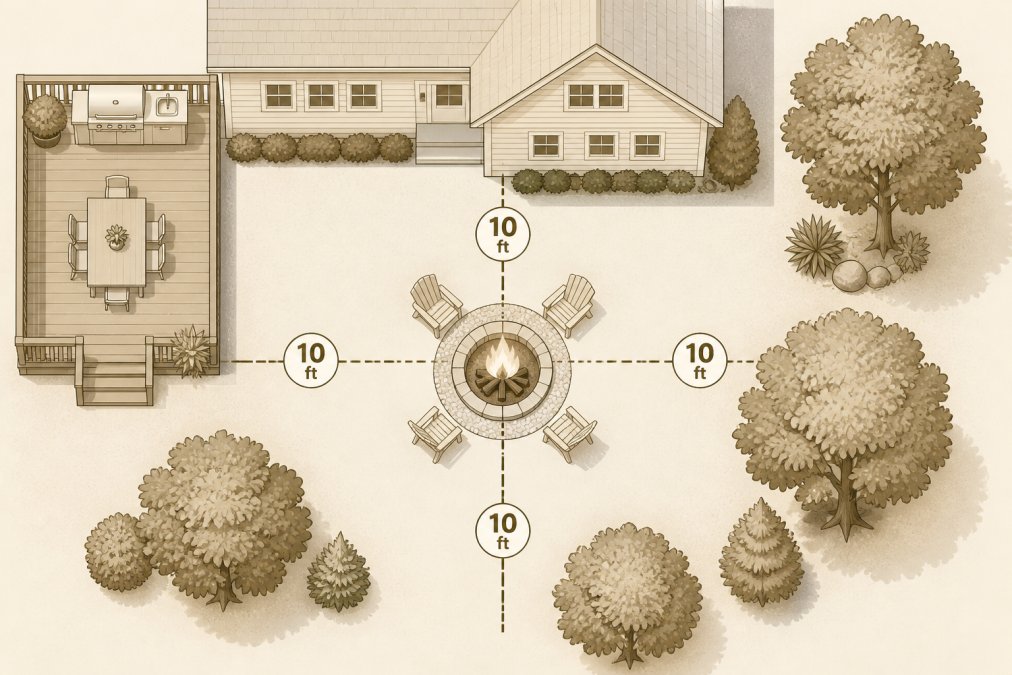
Clearance distance from structures is the single most important safety parameter. Most fire codes require a minimum of 10 feet from your house, garage, sheds, or deck railings. However, many jurisdictions recommend 15 feet for wood-frame structures, as radiating heat can ignite combustible materials at surprising distances, particularly in dry conditions or when wind pushes flames toward your home.
Wood-burning fire pits produce more unpredictable flames and higher radiating heat, arguing for the longer 15-foot clearance when possible. Gas fire pits offer more controlled flames and lower radiant heat, meaning you may comply with the 10-foot minimum in some jurisdictions. Your local fire code is the final authority.
Overhanging branches must be cleared to at least 12 feet above the flames at their highest point. This prevents embers from igniting dry vegetation and allows sparks to dissipate safely. Inspect trees seasonally, as branches grow and shift throughout the year.
Fire Pit Distance from House and Property Lines
Minimum distances for safety
The 10-foot minimum applies in most U.S. fire codes, though 15 feet is safer, particularly in areas with dry summers or high wind exposure. Property lines add a second clearance layer, some jurisdictions require the same 10 to 15-foot clearance from property lines, effectively creating a larger buffer zone. Check local municipal ordinances before finalizing placement; violating property line setbacks can result in citations or relocation orders.
Wind direction matters more than expected. If prevailing winds blow from your fire pit toward your house or neighbor's property, increase your clearance distance beyond the minimum.

Gas vs. wood-burning placement differences
Gas fire pits produce controlled flames with less radiating heat and fewer embers, allowing compliance with 10-foot minimums in some jurisdictions. They also produce less smoke, reducing nuisance for neighbors. Wood-burning fire pits generate higher flame heights, more radiating heat, and significantly more embers, requiring closer adherence to 15-foot clearances.
The Anchorage Wood Finish Square Gas Outdoor Patio Fire Pit from Rooms Outdoors offers a middle ground, a gas pit with wood-finishing aesthetics, providing the safety profile of gas ignition with traditional fire pit appeal. Practically, wood-burning pits should sit closer to 15 feet from structures, while gas pits may be acceptable at 10 feet if local code allows. Always verify your jurisdiction's requirements.
Best Surface for Fire Pit Installation
Non-combustible base materials
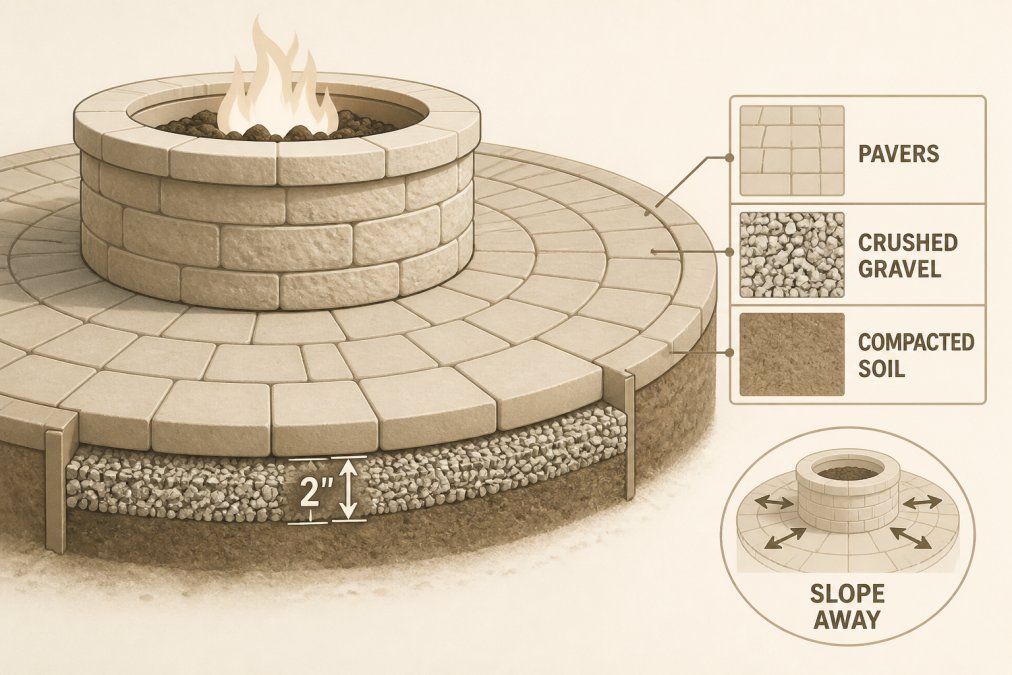
The ground beneath your fire pit must be non-combustible. Grass, mulch, wood chips, or untreated soil will ignite from sustained heat and ember exposure. Concrete pavers are the gold standard, durable, non-combustible, and widely available. Lay pavers in a circle at least 10 feet in diameter around your fire pit location.
Gravel is an effective alternative, particularly crushed rock or pea gravel. Create a 4-inch-deep foundation extending 10 feet outward from the pit's edge. Gravel requires seasonal maintenance to remove accumulated ash and debris.
Flagstone or slate provides a finished aesthetic while maintaining non-combustible properties. These materials are more expensive but create an elegant outdoor living space complementing premium installations like the 28" x 14" Square Steel Wood-Burning Fire Pit from Rooms Outdoors.

Heat conductivity and drainage
Concrete pavers conduct heat efficiently, preventing heat concentration in one spot. Ensure pavers are laid on a stable, level base so they don't shift under thermal stress. Slope your paver base slightly away from the fire pit's center to direct water away from the pit, preventing destabilization and concrete cracking during freeze-thaw cycles.
For gas fire pits requiring gas lines, drainage is critical. Gas line installation requires precise depth and positioning, and water pooling can damage connections or create safety hazards. Many homeowners work with professionals for gas line installation to ensure proper depth, slope, and water protection.
Environmental Factors and Wind Management
Wind makes fire pit placement unpredictable. Even a well-placed pit with proper clearances becomes hazardous when wind pushes flames or embers toward structures or vegetation. Understanding your backyard's wind patterns is essential.
Prevailing winds typically blow from a consistent direction, but local geography, hills, buildings, and tree lines create wind tunnels and eddies that alter patterns significantly. Observe smoke from your grill or other sources to understand how wind actually moves through your specific backyard.
Slope and drainage compound wind effects. A fire pit placed at the bottom of a slope collects cold air and may experience erratic wind behavior. Placing it on slightly elevated ground improves air circulation and reduces smoke pooling or dangerous wind vortices. Higher ground also ensures natural water drainage.
Seasonal maintenance prevents fire hazards. Remove dead branches, trim back dry vegetation, and clear fallen leaves from the area around your fire pit. In dry seasons, this maintenance becomes critical. Dense vegetation creates microclimates affecting wind patterns and increasing fire risk; consider thinning back shrubs to improve air circulation and reduce combustible material nearby.
Local Fire Codes and Municipal Regulations
Your jurisdiction's fire code is the binding authority on fire pit placement. National fire codes provide guidelines, but individual states, counties, and municipalities often have stricter requirements. Some jurisdictions prohibit wood-burning fire pits entirely, while others require permits before installation.
Contact your local fire marshal's office or building department before finalizing your location. Ask specifically about:
- Required clearance distances from your house and property lines
- Setback requirements from deck structures
- Restrictions on wood-burning versus gas pits
- Permit requirements and inspection processes
- Seasonal restrictions during high-fire-danger periods
- Requirements for spark arrestors or fire screens
Written confirmation from your fire marshal documents that your installation complies with local requirements, which is important for insurance purposes. In areas with Homeowners Associations, check your CC&Rs (Covenants, Conditions, and Restrictions) as well, as HOA rules often exceed municipal fire codes.
Step-by-Step Process for Choosing Your Fire Pit Location
Assess your backyard layout
Map your backyard on paper or using a smartphone app that allows measurement overlays. Identify all structures: house, garage, sheds, decks, and fences. Mark property lines clearly. Note large trees, power lines, and dense vegetation.
Using your jurisdiction's minimum clearance distance (typically 10 feet from structures), draw circles around each structure. The fire pit must fall outside all these circles. This exercise often reveals far fewer suitable locations than initially expected.
Consider practical factors beyond safety: Where will guests sit comfortably? Is the location visible from your house? Will smoke blow toward your patio during typical wind patterns?
Measure and mark clearance zones
Physically measure clearance distances using a measuring tape. Start from your house's exterior wall and measure outward 10 or 15 feet depending on your code and fire pit type. Mark this distance with chalk, spray paint, or stakes. Repeat for all structures and property lines.
For overhanging branches, measure upward 12 feet from the proposed location. If branches hang lower, mark them for trimming. Avoid locations directly beneath trees.
Prepare the surface
Remove grass and vegetation from a circle at least 10 feet in diameter around the fire pit's center. Dig out loose soil or organic material to create a stable base. Install your non-combustible base material, lay concrete pavers in a level, stable pattern, or create a 4-inch-deep gravel foundation with proper drainage slope.
For gas fire pits requiring gas lines, professional installation ensures proper line depth, slope, and protection. The Adana 28" Outdoor Propane Fire Pit Table from Rooms Outdoors, for example, requires proper gas line installation to function safely and meet code requirements.
Check local regulations
Contact your local fire marshal or building department with your planned location, providing measurements and setup descriptions. Ask for written confirmation that your installation complies with local codes. If your jurisdiction requires permits, apply before installation. Having this documentation protects you with your insurance company and prevents costly relocation orders.
Common Mistakes to Avoid
Measuring clearance from the pit's edge rather than the heat zone is the most frequent error. Measure from where heat actually extends, not just the visible pit boundary.
Placing fire pits on grass or mulch creates immediate ignition risk. Commit to installing non-combustible base materials, this is non-negotiable.
Ignoring wind patterns leads to smoke and ember problems making the fire pit unusable. Observe wind behavior before finalizing placement.
Neglecting to check local codes creates legal and insurance problems. Get written code confirmation before installation.
Failing to clear overhanging branches creates progressive hazards as trees grow. Plan for seasonal branch management as part of your maintenance routine.
Underestimating heat impact on nearby structures is common. Radiating heat can damage siding, melt plastic components, or scorch painted surfaces. If clearance is tight, consider using a heat shield or reflective barrier.
Creating a safe fire pit placement requires attention to clearance distances, surface materials, environmental factors, and local regulations. At Rooms Outdoors, we help homeowners understand these principles so they can confidently add premium fire features like the 25" Round Wood-Burning Fire Pit with Grill Grate to their outdoor spaces. The right location transforms a fire pit from a potential hazard into the centerpiece of your backyard retreat. Shop the collection today and discover fire pit options designed for both safety and elegance.
| Safety Factor | Requirement | Wood-Burning | Gas |
|---|---|---|---|
| Distance from house | 10-15 feet | 15 feet recommended | 10 feet acceptable |
| Overhanging branches | 12 feet clearance | Critical | Critical |
| Base material | Non-combustible | Required | Required |
| Clearance diameter | 10+ feet | Minimum 10 feet | Minimum 10 feet |
| Wind consideration | Away from structures | High priority | Moderate priority |
Frequently Asked Questions
How far should a fire pit be from a house? Most fire codes require a minimum of 10 feet from structures, though 15 feet is recommended for wood-burning pits. Gas pits may comply with 10-foot minimums depending on your jurisdiction. Always verify your local fire code.
Can I put a fire pit on grass? No. Grass is combustible and will ignite from sustained heat and ember exposure. Install a non-combustible base of concrete pavers, gravel, or flagstone extending at least 10 feet outward from the pit's center.
What's the best surface for a fire pit? Concrete pavers offer the best combination of safety, durability, and aesthetics. Gravel is an effective and less expensive alternative. Both materials are non-combustible and drain water properly.
Do I need a permit for a fire pit? Many jurisdictions require permits before fire pit installation. Contact your local building department or fire marshal to determine requirements in your area. Obtaining permits ensures your installation complies with local codes and protects your insurance coverage.
How do I know if my fire pit location is safe? Measure clearance distances from all structures, verify non-combustible base materials are in place, ensure overhanging branches are cleared, and confirm compliance with local fire codes. Written confirmation from your fire marshal provides final verification.
Frequently Asked Questions
How far away should a fire pit be from your house?
Most fire codes require a minimum of 10-15 feet from your house, though some jurisdictions mandate 25 feet or more. The exact distance depends on your local municipal ordinances and the type of fire pit you're using. Gas fire pits often have less stringent requirements than wood-burning models. Check with your local fire department or building code office to confirm the specific fire pit distance from house regulations in your area before installation.
What is the best surface for a fire pit?
Non-combustible materials like pavers, gravel, or hardscape stone create the safest foundation. Pavers and concrete offer excellent structural integrity and minimal heat conductivity to surrounding soil. Avoid wood decks, mulch, and dry vegetation entirely. A gravel foundation 6-12 inches deep provides drainage while containing embers. The best surface for fire pit installation combines non-combustible base materials with proper drainage to prevent water pooling and maintain long-term durability.
Can I put a fire pit on a wooden deck or patio?
No. Wooden decks are highly combustible and pose a serious fire hazard. Even fire pits with screens cannot safely sit on wood surfaces due to radiating heat and the risk of ember escape. Concrete patios are safer but still require a non-combustible barrier underneath to protect the concrete from thermal stress. Always install your fire pit directly on pavers, gravel, or engineered non-combustible materials to ensure safety and structural integrity.
Do gas and wood-burning fire pits have different placement requirements?
Yes. Gas fire pits typically require less clearance distance than wood-burning models because they produce less radiating heat and fewer embers. However, gas line installation adds complexity, you may need a licensed professional to run underground lines safely. Wood-burning fire pits generate more heat and spark arrestor concerns, often requiring greater distance from structures and vegetation. Both types must comply with local fire codes, but wood-burning models generally demand stricter adherence to clearance distance and surface material standards.
EXTERNAL CITATIONS:
[EXTERNAL_LINK: National Fire Protection Association fire safety standards | nfpa.org]
[EXTERNAL_LINK: U.S. Consumer Product Safety Commission outdoor fire pit guidelines | cpsc.gov]
[EXTERNAL_LINK: International Building Code fire pit clearance requirements | iccsafe.org]
This article was written using GrandRanker