

Gas vs Wood Fire Pits: Complete 2026 Comparison Guide
Table of Contents
- Gas vs Wood Fire Pits: Key Differences at a Glance
- Pros and Cons of Wood-Burning Fire Pits
- Pros and Cons of Gas Fire Pits
- Heat Output, BTU Performance, and Temperature Control
- Maintenance, Cleaning, and Long-Term Care Requirements
- Fire Pit Safety Tips and Considerations for Both Types
- Environmental Impact: Smoke Emissions and Carbon Footprint
- Smokeless Fire Pit Options and Clean-Burning Technology
Gas vs Wood Fire Pits: Complete 2026 Comparison Guide
Last Updated: July 28, 2026
When deciding between a gas vs wood fire pits setup for your backyard, the choice comes down to your priorities: convenience and control versus ambiance and tradition. At Rooms Outdoors, we understand that this decision shapes how you'll use your outdoor living space for years to come. Both options deliver warmth and gathering appeal, but they differ fundamentally in operation, maintenance, cost, and experience.
Gas vs Wood Fire Pits: Key Differences at a Glance
A wood-burning fire pit burns seasoned firewood, creating traditional flames with smoke, ash, and crackling sound. A gas fire pit uses propane or natural gas to produce instant flames with adjustable heat output via BTU controls and minimal cleanup. The choice shapes everything from installation requirements to long-term fuel costs.
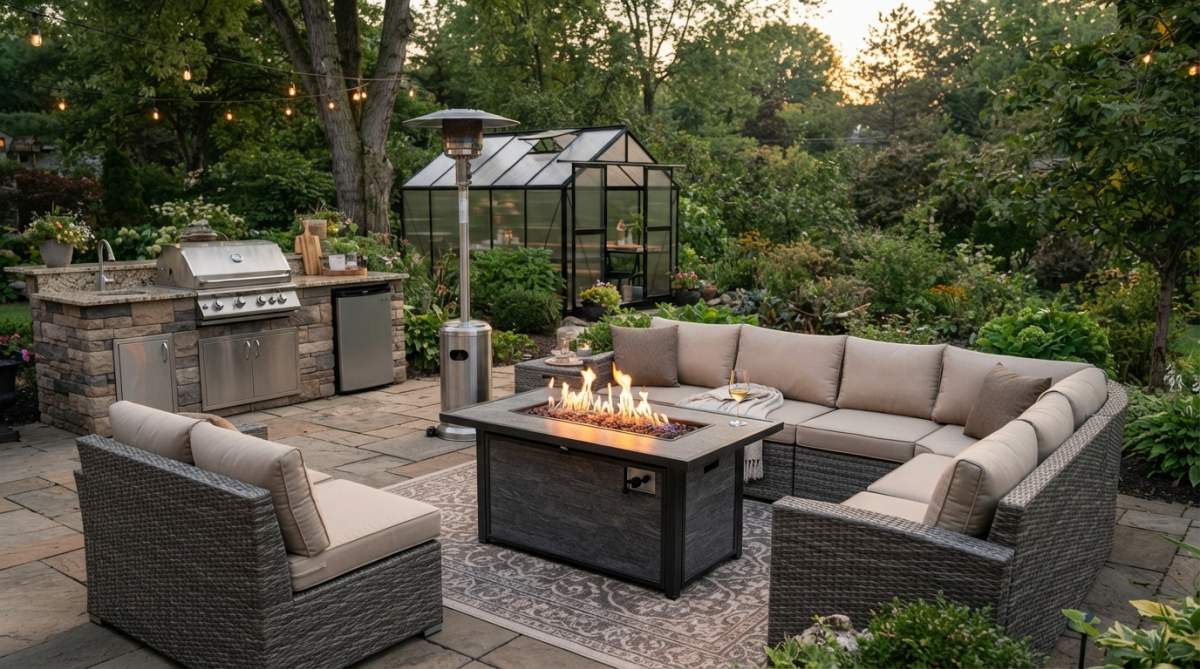
Research from the American Gas Association indicates that propane availability varies significantly by region, affecting the practical viability of gas fire pits in some areas. Local fire ordinances and HOA restrictions may prohibit wood burning entirely, making gas the only legal option in certain neighborhoods.
Quick Comparison Table
| Aspect | Wood-Burning | Gas (Propane/Natural Gas) |
|---|---|---|
| Initial Cost | $300-$1,500 | $200-$2,500+ |
| Fuel Cost (per use) | $5-$15 per session | $2-$8 per hour |
| Setup Time | 10-20 minutes | 2-5 minutes |
| Heat Output (BTU) | Varies; ~50,000 BTU average | 30,000-100,000 BTU (adjustable) |
| Smoke/Emissions | Yes; significant | Minimal to none |
| Maintenance | High (ash removal, creosote) | Low (occasional cleaning) |
| Installation | Minimal; portable options | May require professional install |
| Ambiance | Traditional, crackling flames | Clean, adjustable flames |
| Best For | Nostalgic experience, cooking | Convenience, year-round use |
Pros and Cons of Wood-Burning Fire Pits
Wood-burning fire pits deliver authentic outdoor experience with crackling sound, wood scent, and flickering flames that gas cannot replicate. They require no utility connections, making them ideal for remote properties or renters wanting portability.
However, wood burning comes with real drawbacks. Smoke emission is significant, especially with unseasoned wood, irritating eyes and driving guests inside. Ash removal is a regular chore, and creosote buildup requires periodic scrubbing. Sparks can travel 10-15 feet, posing burn risks and fire hazards. Wood seasoning matters enormously; green or wet wood produces excessive smoke and creosote accumulation.
The Rooms Outdoors collection includes the 25" Round Wood-Burning Fire Pit with Grill Grate, Lid & Poker at $519.00, offering a 3-in-1 design combining fire pit, grill, and cooking surface. The included lid and poker simplify maintenance and safety management.
Pros:
- Authentic ambiance with crackling flames and wood scent
- No utility connections required; fully portable
- Lower initial cost than many gas alternatives
- Excellent for live-fire cooking and roasting
- Works during power outages
Cons:
- Heavy smoke emission (problematic for neighbors and air quality)
- Requires seasoned wood; green wood creates excessive smoke
- Regular ash removal and creosote cleaning needed
- Fire safety concerns with sparks and open flame
- May violate local fire ordinances or HOA restrictions
- Slower to start than gas alternatives
Pros and Cons of Gas Fire Pits
Gas fire pits prioritize convenience and control. Ignition is instant with adjustable heat output via valve or electronic control. There's no smoke, ash, or creosote, making cleanup virtually nonexistent. Many gas models are permitted during air quality alerts or in areas where wood burning is restricted.
The trade-off is dependence on fuel supply. Propane tanks require regular refilling, and natural gas lines need professional installation. Initial setup costs can exceed wood pits if installing a permanent natural gas line. The flames lack the crackling authenticity some prefer, and long-term fuel costs add up with frequent use.
The Modular Outdoor Kitchen BBQ Island (104") from Rooms Outdoors ($4,452.68) integrates a propane gas fire feature within a comprehensive outdoor living setup, combining grilling, refrigeration, and ambiance.
Pros:
- Instant ignition; no fire-starting delays
- Adjustable flame height and heat output via BTU control
- Zero smoke, ash, or creosote
- Minimal maintenance; occasional lava rock or fire glass replacement
- CSA-approved for use during fire bans
- Consistent, reliable heat
- Cleaner burning; lower carbon footprint per BTU
Cons:
- Requires propane tank or natural gas line installation
- Fuel costs accumulate with frequent use
- Less authentic ambiance than wood burning
- Propane tanks need regular refilling or swapping
- Initial installation may require professional help
- Lacks crackling sound and wood scent
- Not suitable for areas with propane supply shortages
Heat Output, BTU Performance, and Temperature Control
BTU (British Thermal Unit) output determines how much warmth a fire pit generates. Wood-burning pits produce roughly 50,000 BTU on average, though this varies based on wood type, moisture content, and airflow design. Heat output is difficult to control; you manage it by adjusting wood placement and airflow, which is imprecise.
Gas fire pits range from 30,000 BTU (portable models) to 100,000+ BTU (large permanent installations). This range allows precise temperature control via dial or button adjustment. For consistent, controllable warmth, gas is superior. For roasting marshmallows and enjoying the experience, wood-burning fire pits suffice.
The Solo Stove Bonfire 2.0 achieves smokeless performance through its 360° Airflow design, burning up to 400° hotter than standard fires while maintaining efficient heat output. Breeo's X Series 24 Smokeless Fire Pit delivers similar efficiency with double-wall construction and X Airflow™ technology, making both options compelling for those wanting wood-burning ambiance without smoke compromise.
Maintenance, Cleaning, and Long-Term Care Requirements
Wood-burning fire pits demand regular maintenance. After each use, remove ash from the firebox. Creosote, a flammable residue from burning wood, accumulates on interior surfaces and requires scrubbing every 2-4 weeks with frequent use. The fire bowl may rust over time, especially in humid climates, necessitating protective covers and occasional refinishing.
Gas fire pits require minimal maintenance. Lava rocks or fire glass should be raked occasionally to ensure even gas distribution but don't require frequent replacement. The ignition system and burner may need professional inspection annually. Covers protect the unit from debris and weather, extending its lifespan.
For homeowners in high-humidity regions, wood-burning pits face accelerated rust and deterioration. Gas pits, with sealed burner systems, handle moisture more gracefully. The 28" x 14" Square Steel Wood-Burning Fire Pit from Rooms Outdoors ($1,059.00) features a stone gray finish designed to age gracefully, but even premium materials benefit from regular cover use in wet climates.
Fire Pit Safety Tips and Considerations for Both Types
Fire safety applies to both gas and wood-burning pits, but risks differ. For wood-burning fire pits, the primary hazard is uncontrolled spark emission. Sparks can travel 10-15 feet, igniting nearby vegetation, deck materials, or structures. A spark screen is essential; maintain at least 15 feet of clearance from trees, fences, and buildings. Never leave a wood fire unattended, and always have a fire extinguisher or garden hose nearby.
Gas fire pits present different risks. Propane tanks can leak if damaged or improperly maintained. Check hose connections monthly for cracks or loose fittings. Ensure the thermocouple (a safety device that shuts off gas if the flame goes out) functions properly. Place the fire pit on level ground to prevent propane tank tipping. Never use a damaged propane tank, and store spares upright in a well-ventilated area, away from living spaces.
Both types require clearance from overhead structures. Pergolas, awnings, or low-hanging branches should be at least 12 feet above the fire pit opening to prevent heat damage and fire risk. Check your local fire safety ordinances; many municipalities mandate minimum setbacks from property lines and structures.
National Fire Protection Association fire pit safety guidelines recommend that all fire pits, regardless of type, be monitored continuously while in use and extinguished completely before leaving the area.
Environmental Impact: Smoke Emissions and Carbon Footprint
Wood-burning fire pits produce significant smoke emissions, including particulate matter (PM2.5 and PM10) that degrades air quality and poses respiratory risks. The EPA recognizes wood smoke as a major contributor to outdoor air pollution, particularly during winter months when temperature inversions trap smoke near ground level.
Gas fire pits produce minimal smoke, mainly carbon dioxide and water vapor. From an air quality perspective, gas is substantially cleaner. However, propane and natural gas are fossil fuels with extraction and processing carbon footprints. For environmentally conscious homeowners, smokeless wood-burning pits (like Solo Stove and Breeo models) offer a middle ground: they burn wood more efficiently, reducing emissions by 80% compared to traditional fire pits while maintaining authentic ambiance.
The carbon footprint calculation depends on frequency of use and fuel source. A household using a wood pit twice weekly produces more air pollution annually than a gas pit used nightly.
Smokeless Fire Pit Options and Clean-Burning Technology
Smokeless fire pits combine wood-burning ambiance with dramatically reduced emissions through double-wall construction and airflow engineering that achieves complete combustion.
The Solo Stove Bonfire 2.0 ($299.99 for the bundle) uses patented 360° Airflow design to draw air through the firebox and around the flame, reducing smoke by up to 80% compared to traditional fire pits. The removable ash pan simplifies cleanup, and the lightweight stainless steel construction makes it portable.
The Breeo X Series 24 Smokeless Fire Pit ($599-$799) employs X Airflow™ technology with double-wall construction, offering similar smoke reduction. It's heavier and more permanent than Solo Stove but excels at live-fire cooking with compatible accessories. Made in the USA from durable stainless or Corten steel, it's built for longevity.
Both options cost more than traditional wood pits but less than many gas alternatives. They appeal to homeowners wanting authentic wood-burning experience without smoke, ash, and air quality concerns.
The Outland Living Firebowl 883 Mega ($204.24) represents a portable gas alternative with 58,000 BTU output, no assembly required, and CSA approval for use during campfire bans. It includes a UV-resistant cover, pre-attached hose with regulator, and lava rocks, making it immediately ready for use.
Choosing between gas vs wood fire pits depends on your priorities: Do you value authentic ambiance and are willing to manage maintenance, or do you prefer convenience and clean burning? If local fire ordinances restrict wood burning, gas is your only option. If you live in a region with frequent air quality alerts, smokeless or gas fire pits protect your community's health while preserving your outdoor living space.
Rooms Outdoors offers both wood-burning and gas fire pit options, including premium models designed for durability and refined aesthetics. The 25" Round Wood-Burning Fire Pit ($519.00) delivers traditional charm with 3-in-1 functionality, while the Modular Outdoor Kitchen BBQ Island ($4,452.68) integrates gas-powered heat into a complete outdoor kitchen. With free shipping on most orders over $1,500 within the continental U.S. and secured payment processing, Rooms Outdoors makes it effortless to create your ideal backyard retreat. Shop the collection today and transform your outdoor space into a destination for connection and quiet luxury.
Frequently Asked Questions
Which type of fire pit is better, gas or wood?
Neither is universally better; it depends on your priorities. Gas fire pits excel in convenience, clean burning, and heat control, making them ideal for frequent use and low-maintenance outdoor living. Wood-burning fire pits offer nostalgic ambiance, the ability to roast marshmallows, and lower fuel costs, but require more maintenance and produce smoke emissions. Consider your lifestyle, local regulations, and how often you'll use your fire pit when deciding between gas vs wood fire pits.
Do gas fire pits provide enough heat output and warmth?
Yes, gas fire pits deliver substantial heat. Most propane and natural gas models produce 40,000 to 100,000+ BTU output, with the Outland Living Firebowl 883 Mega offering 58,000 BTU/HR for example. This is sufficient to warm a seating area for 4-6 people. Gas fire pits also offer adjustable flame control, letting you increase or decrease heat as needed. However, wood-burning fire pits may feel warmer due to radiant heat from live flames, though actual BTU output varies by wood type and seasoning.
What are the main disadvantages of wood-burning fire pits?
Wood-burning fire pits require significant maintenance: regular ash removal, creosote buildup management, and wood seasoning preparation. They produce smoke emissions that can irritate eyes and clothing, and are often restricted by local fire ordinances or HOA rules. Setup and cleanup take more time, and wood fuel costs add up. Additionally, they're weather-dependent, wet wood won't burn well, and create a larger carbon footprint than gas alternatives. However, they do offer authentic ambiance and lower initial costs.
Are gas fire pits safer than wood fire pits?
Gas fire pits are generally safer for several reasons: they produce no smoke, require no open flame management, and many are CSA-approved for use during fire bans. They eliminate creosote buildup, spark screens aren't needed, and there's no risk of flying embers. However, both types require proper ventilation and safe placement away from structures. Gas fire pits do require a propane tank or natural gas line connection, which introduces different safety considerations. Always follow manufacturer guidelines and local fire safety regulations regardless of type.
What is the total cost of ownership for gas vs wood fire pits?
Initial costs vary significantly. Wood-burning fire pits like the Rooms Outdoors 25" Round model start at $519, while gas options and premium wood models range higher. Gas fire pits require ongoing propane tank refills (typically $15-$30 per fill), while wood requires seasoned firewood ($150-$300 per cord). Gas offers lower long-term fuel costs and minimal maintenance expenses. Wood has cheaper initial purchase prices but higher cleanup and potential replacement costs. Calculate your expected usage frequency and local fuel prices to determine which offers better total cost of ownership for your situation.
Can you cook or roast food over both types of fire pits?
Wood-burning fire pits are excellent for cooking and roasting marshmallows, the live flames provide authentic campfire cooking. Many models include grill grates, like the Rooms Outdoors 25" Round Fire Pit with Grill Grate. Gas fire pits can also accommodate cooking accessories, though the flame is more controlled and less intense. Gas offers better temperature management for precise cooking, while wood provides higher, more variable heat. If roasting marshmallows and live-fire cooking are priorities, wood-burning is the traditional choice, though modern gas models are increasingly cook-friendly with compatible accessories.
This article was written using GrandRanker