

Modern Backyard Fire Pit Ideas: 7 Designs for 2026
Table of Contents
- Modern Backyard Fire Pit Ideas: Where Design Meets Function
- Outdoor Fire Pit Ideas With Seating: Creating Your Social Hub
- Gas Fire Pit Ideas Modern: Low-Maintenance Elegance
- Fire Pit Materials Modern: Durability and Aesthetics
- Small Modern Fire Pit Ideas: Maximizing Limited Space
- Safety, Permits, and Regional Considerations
- Maintenance, Cost-to-Value, and Long-Term Care
- DIY vs. Built-In: Planning Your Installation
Last Updated: July 29, 2026
Modern backyard fire pit ideas have become the centerpiece of sophisticated entertaining and intimate gatherings. At Rooms Outdoors, we've curated premium outdoor living solutions that help homeowners elevate their backyards into serene retreats. Whether you're drawn to sleek linear designs, traditional wood-burning warmth, or low-maintenance gas options, the right fire pit becomes the heart of your outdoor living space. Below, we'll explore seven design approaches that balance aesthetic appeal with practical functionality.
Modern Backyard Fire Pit Ideas: Where Design Meets Function
The best modern backyard fire pit ideas balance visual sophistication, practical functionality, and integration with your existing landscape. Contemporary designs treat the fire pit as part of a cohesive outdoor living ecosystem, considering sightlines, traffic flow, and how the fire pit anchors seating areas and hardscape.
Modern fire pit options include linear fire tables that align with minimalist architecture, built-in masonry structures that become permanent landscape features, and portable fire pit kits that offer flexibility for smaller spaces. Material choices, concrete, steel, stone, and composite materials, each bring different aesthetic qualities and maintenance profiles.
What separates a mediocre fire pit installation from an exceptional one often comes down to hardscape integration. A fire pit surrounded by thoughtful paver patterns, retaining walls, and landscape lighting becomes an outdoor room. Consider how the fire pit relates to your deck, patio, and garden zones, these spatial relationships determine whether your fire pit enhances or disrupts your outdoor aesthetic.
Outdoor Fire Pit Ideas With Seating: Creating Your Social Hub
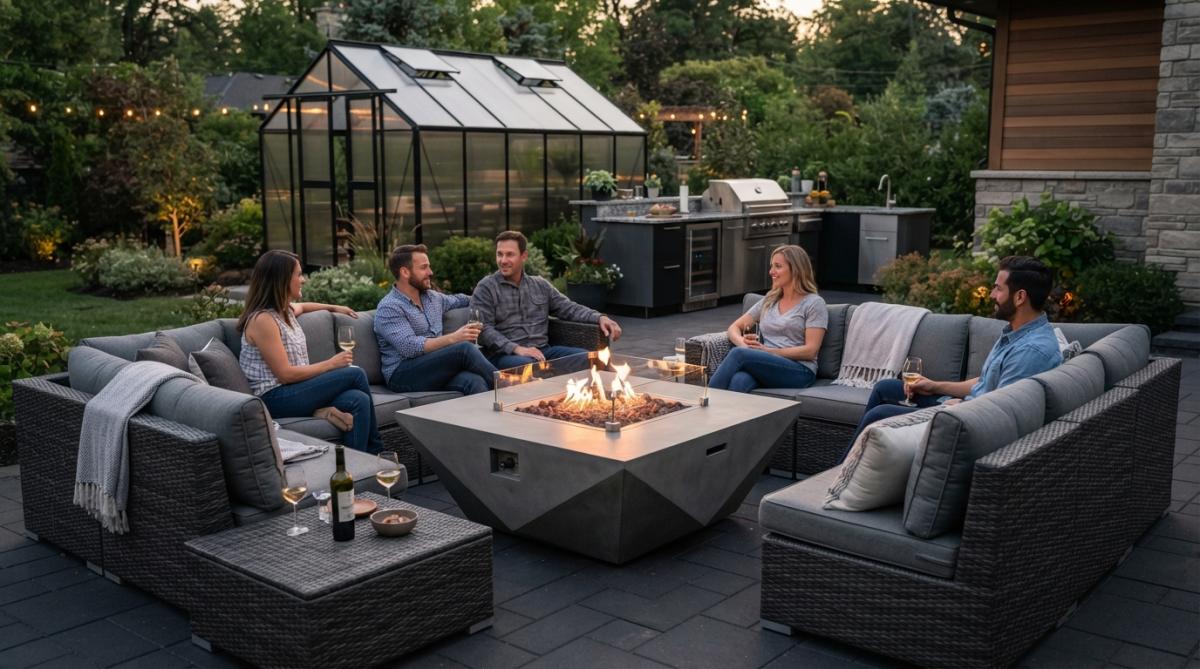
The seating arrangement around your fire pit determines whether your space feels intimate or sprawling. Modern outdoor fire pit ideas with seating integrate seating directly into the design rather than treating it as an afterthought.
Seating Wall Integration
A built-in seating wall transforms your fire pit into a destination. Rather than scattered chairs, a continuous seating surface creates a defined gathering space that feels intentional and sophisticated. Seating walls typically stand 16-18 inches high, allowing comfortable lounging without additional cushions. Construct them from the same materials as your fire pit, matching stone, pavers, or concrete, creating visual continuity throughout your hardscape.
Built-in seating increases property value, reduces maintenance compared to individual furniture pieces, and creates a sense of enclosure that makes smaller backyards feel more intimate. A curved seating wall around a circular fire pit creates a natural focal point, while a linear wall paired with a linear fire table establishes a more contemporary, geometric feel.
Modular Furniture Arrangements
For those preferring flexibility, modular outdoor furniture offers modern sophistication without permanent installation. Weather-resistant sectionals, individual lounge chairs, and ottomans can be rearranged seasonally or repositioned for different gatherings. Create distinct seating groupings oriented toward the fire pit in a U-shape or circular pattern to maximize sightlines and conversation flow. Modern outdoor furniture in neutral tones complements contemporary fire pit designs without visual competition.
Gas Fire Pit Ideas Modern: Low-Maintenance Elegance
Gas fire pits represent the modern solution for those prioritizing convenience over traditional wood-burning ambiance. They ignite instantly, produce adjustable flames, require minimal cleanup, and eliminate ash and smoke concerns.
Propane vs. Natural Gas Considerations
Propane fire pits use portable tanks that require periodic refilling, typically every 2-3 months depending on usage frequency. Natural gas connections tap into your home's existing gas line, eliminating refill needs but requiring professional installation and limiting portability.
Propane offers flexibility and works anywhere in your yard without trenching. Natural gas provides uninterrupted operation without tank monitoring, making it ideal for frequently used fire pits. Consider your usage patterns and willingness to manage propane tanks when deciding between these options.
Linear and Fire Table Designs
Linear fire pits and fire tables represent the pinnacle of modern fire pit aesthetics. These elongated designs integrate seamlessly with contemporary architecture and create dramatic focal points impossible with traditional circular pits. Fire tables blur the line between functional seating and fire feature, providing warmth and ambiance while doubling as a gathering surface. Some designs incorporate tempered glass guards that contain flames while maintaining visibility.
The Rooms Outdoors collection includes modular outdoor kitchen islands with integrated fire elements, allowing you to create sophisticated entertaining spaces that combine cooking, dining, and fireside warmth. Gas fire pits eliminate the need for fuel, though many homeowners add decorative fire glass or lava rock around the burner for enhanced visual appeal. Fire glass comes in various colors, clear, amber, blue, and green, allowing customization to match your design scheme.
Fire Pit Materials Modern: Durability and Aesthetics
Material selection determines both the visual character of your fire pit and its longevity in your climate.
Metal, Masonry, and Composite Options
Steel fire pits offer clean lines and contemporary aesthetics, particularly when finished in matte black or weathered steel. Steel develops a natural patina over time, which some homeowners find appealing. Stainless steel resists rust and weathering but costs significantly more.
Masonry fire pits, constructed from stone, brick, or concrete, provide permanence and integrate beautifully with hardscape elements. These built-in structures become landscape features rather than movable objects. Masonry absorbs and radiates heat, making them particularly efficient for wood-burning applications. However, masonry requires proper construction to prevent cracking from freeze-thaw cycles in northern climates.
Composite materials and concrete offer modern aesthetics with lower maintenance than traditional masonry. Concrete fire pits can be customized in shape, color, and finish, allowing seamless integration with contemporary design schemes.
Fire Glass, Lava Rock, and Hardscape Integration
Fire glass and lava rock serve both functional and aesthetic purposes in gas fire pits. Lava rock promotes even heat distribution and can be replaced as it degrades. Fire glass creates a more refined appearance, reflecting flames and adding color without the rustic quality of lava rock.
The hardscape surrounding your fire pit matters as much as the pit itself. Pavers, concrete, and stone create defined borders and prevent erosion. Retaining walls add vertical dimension and can incorporate seating surfaces. Landscape lighting transforms the space after dark, creating ambiance that extends usability into evening hours.
Small Modern Fire Pit Ideas: Maximizing Limited Space
Small spaces demand creative thinking and strategic material choices to create functional fire features that don't overwhelm the landscape.
Portable and Compact Fire Pit Kits
Portable fire pit kits offer the easiest entry point for small-space fire pit installation. These self-contained units require no permanent installation, can be moved seasonally, and work on decks, patios, or in garden corners. The 25" Round Wood-Burning Fire Pit with Grill Grate from Rooms Outdoors exemplifies this approach, a 3-in-1 design that functions as a fire pit, grill, and cooking surface, maximizing utility in minimal footprint.
Portable propane fire bowls offer another compact solution. These tabletop models provide warmth and ambiance without requiring ground space, making them ideal for small decks or patios. They ignite instantly, produce adjustable flames, and require no ash cleanup.
Vertical Design and Corner Solutions
Corner fire pits maximize limited space by using areas that might otherwise remain unused. A triangular or quarter-circle fire pit tucked into a yard corner creates a cozy gathering spot without consuming central space. Raised fire pits elevate the flame higher than ground level, making them more visible and accessible while occupying less footprint.
Safety, Permits, and Regional Considerations
Fire pit installation isn't purely aesthetic, safety regulations and local building codes govern where and how you can install fire features.
Local Fire Codes and Building Permits
Most municipalities require permits for permanent fire pit installations and have specific regulations governing distance from structures, property lines, and vegetation. These setback requirements typically range from 10-15 feet from buildings and 5 feet from property lines, though local codes vary significantly. Some jurisdictions prohibit open-flame fire pits entirely, requiring gas models with enclosed burners instead.
Check with your local fire marshal's office or building department before purchasing materials. A brief conversation can clarify whether your planned installation requires permits, what specific regulations apply, and whether your chosen design meets local standards.
Climate-Specific Maintenance and Weather Resistance
Fire pit longevity depends heavily on climate conditions. In regions with freeze-thaw cycles, masonry fire pits can crack if not properly constructed. Coastal areas with salt spray accelerate corrosion of metal components. Arid climates with intense sun exposure can degrade certain materials faster than humid regions.
Wood-burning fire pits in wet climates require covered storage during off-season months. Gas fire pits are generally more resilient across climates. All fire pits benefit from protective covers when not in use, particularly in regions with significant seasonal weather variations.
Consider your regional climate when selecting materials. In the Pacific Northwest where moisture is constant, stainless steel or sealed concrete resists weathering better than untreated steel. In arid Southwest climates, concrete can crack from extreme temperature swings, while steel develops attractive patina.
Safety Screens, Spark Guards, and Ignition Systems
Modern fire pit safety features prevent sparks from escaping and reduce burn risks. Safety screens contain flying embers while maintaining visibility of flames. For wood-burning pits, these screens are essential, particularly if your fire pit sits near vegetation or structures.
Gas fire pits include ignition systems that have evolved significantly in recent years. Electronic ignition systems provide reliable startup without matches or lighters, while some models include remote controls for flame adjustment and ignition.
Maintenance, Cost-to-Value, and Long-Term Care
Understanding maintenance requirements and long-term care prevents deterioration and maximizes your investment's lifespan.
Year-Round Upkeep for Wood-Burning and Gas Options
Wood-burning fire pits require regular ash removal after use, seasonal chimney or vent cleaning, and protective covers during off-season storage. Wood smoke also creates air quality concerns in certain regions, with some jurisdictions restricting wood-burning on high-pollution days.
Gas fire pits demand less hands-on maintenance but require seasonal inspection of connections, burners, and ignition systems. Propane tanks need periodic refilling and should be stored safely away from living areas. Natural gas lines require professional inspection annually to ensure no leaks.
Masonry fire pits benefit from annual inspection for cracks or mortar deterioration. Sealing stone or concrete surfaces every 2-3 years protects against weathering and staining. Metal fire pits should be cleaned regularly to prevent rust accumulation, with periodic application of rust-preventative products.
Investment ROI and Curb Appeal Impact
Fire pits consistently rank among the highest-value outdoor improvements for curb appeal and property enjoyment. The National Association of Realtors indicates that outdoor living improvements typically return 50-80% of installation costs at resale, with well-executed fire pit installations often exceeding these benchmarks.
Beyond resale value, fire pits deliver immediate lifestyle benefits. The space becomes a gathering destination that extends outdoor entertaining season into cooler months. A sophisticated fire pit area increases daily backyard usage and creates memorable experiences with family and friends.
The cost-to-value equation shifts based on your installation approach. A simple portable fire pit costing under $600 delivers substantial ambiance with minimal investment. A built-in masonry fire pit with integrated seating and hardscaping might cost $3,000-$8,000 but becomes a permanent landscape feature that enhances property value significantly. The Modular Outdoor Kitchen BBQ Island from Rooms Outdoors at $4,452.68 combines fire features with cooking and entertaining functionality, creating a premium outdoor living space that delivers exceptional value.
DIY vs. Built-In: Planning Your Installation
The decision between DIY portable fire pits and professionally installed built-in features shapes both your budget and the final result.
A DIY approach using portable fire pits or simple kits allows immediate installation without permits or professional labor. You can experiment with placement and upgrade later if desired. This low-commitment strategy works well for renters, those uncertain about permanence, or homeowners testing ideas before major investments.
Built-in installations require professional design and construction but deliver permanent, integrated results. A professionally designed fire pit area considers sightlines, traffic patterns, drainage, and material coordination in ways that transform your entire backyard.
Most homeowners benefit from a hybrid approach: start with a portable fire pit to understand how fire features enhance your space, then invest in built-in installation once you've identified the optimal location and design direction.
Fire pits have become essential elements of modern outdoor living, transforming backyards into sophisticated entertaining spaces that extend your home's livable square footage. Whether you choose a portable propane bowl, a linear gas fire table, or a built-in masonry feature, the right fire pit becomes the heart of your outdoor retreat. Rooms Outdoors offers curated fire pit selections and integrated outdoor living solutions designed to create serene, connected spaces. Explore the collection today and discover how a thoughtfully designed fire pit elevates your backyard from ordinary to extraordinary, creating a personal retreat built for comfort, connection, and lasting memories.
National Association of Realtors Outdoor Living Report 2026
NFPA Fire Pit Safety Guidelines and Local Code Requirements
American Society of Landscape Architects Hardscape Design Standards
Frequently Asked Questions
What's the difference between wood-burning and gas fire pit ideas for modern backyards?
Wood-burning fire pits offer authentic ambiance and lower upfront costs, but require more maintenance, storage, and produce smoke. Gas fire pits using propane or natural gas provide cleaner operation, precise temperature control, and easier ignition systems, ideal for modern designs prioritizing convenience. Gas options work well in smaller spaces and integrate seamlessly into hardscaped patios. Consider your lifestyle: wood for occasional gatherings, gas for frequent entertaining.
How do I choose fire pit materials that will withstand my regional climate?
Assess your region's moisture, temperature swings, and weather patterns. Coastal areas benefit from weather-resistant stainless steel or composite materials that resist salt corrosion. Cold climates require materials that handle freeze-thaw cycles without cracking, concrete and masonry need proper sealing. Pacific Northwest homes with constant rain need excellent drainage and quick-drying materials. Metal fire bowls should have protective coatings. Consult local landscape architects familiar with your climate to ensure long-term durability and minimize annual refinishing.
Do I need a permit for a modern backyard fire pit?
Yes, most U.S. jurisdictions require permits for permanent fire pit installations, especially built-in or gas-powered models. Portable fire pit kits may have fewer restrictions, but check your local fire codes first. Setback requirements (distance from structures) typically range from 10-25 feet. Contact your city or county building department before purchasing materials. Permits ensure your design meets safety standards and protects your homeowner's insurance. Skipping permits can result in fines or removal orders.
What maintenance do modern fire pits require year-round?
Wood-burning pits need ash removal, grate cleaning, and seasonal chimney inspections. Gas fire pits require annual burner checks, line inspections, and ignition system testing. Both types benefit from weather-resistant covers during off-season storage. In wet climates, inspect seals and drainage quarterly. Fire glass and lava rock need occasional rinsing to maintain appearance. Built-in masonry installations should be sealed every 2-3 years. Regular maintenance extends lifespan, prevents costly repairs, and ensures safe operation for years of outdoor living enjoyment.
This article was written using GrandRanker