

Modern Greenhouse Ideas for Small Backyards: 7 Designs
Table of Contents
- Modern Greenhouse Ideas for Small Backyards: An Overview
- 1. Lean-To Greenhouses: Space-Saving Wall-Mounted Solutions
- 2. Polycarbonate Greenhouses: Durability Meets Affordability
- 3. Victorian-Style Glasshouses for Aesthetic Appeal
- 4. Small Garden Shed Integration: Dual-Purpose Structures
- 5. Greenhouse Shelving Ideas for Small Spaces
- 6. Best Plants for Small Greenhouses: Seasonal Planning
- 7. Small Greenhouse Design Ideas: Climate & Permitting
Last Updated: July 15, 2026
Modern Greenhouse Ideas for Small Backyards: An Overview
Modern greenhouse ideas for small backyards have evolved beyond traditional glass boxes to include sleek polycarbonate designs, wall-mounted lean-to systems, and integrated garden solutions. The challenge isn't finding a greenhouse design, it's finding one that fits your space, climate, budget, and zoning restrictions. This guide covers seven distinct modern greenhouse ideas, each with specific use cases, real pricing, and honest trade-offs.
1. Lean-To Greenhouses: Space-Saving Wall-Mounted Solutions
Lean-to designs solve the fundamental problem of small-space gardening: they use existing structures, your house, garage, or fence, as one wall, cutting the footprint in half compared to freestanding models. A lean-to greenhouse mounted against your home's south-facing wall gains passive heat from the building's thermal mass, extending your growing season without additional energy input.
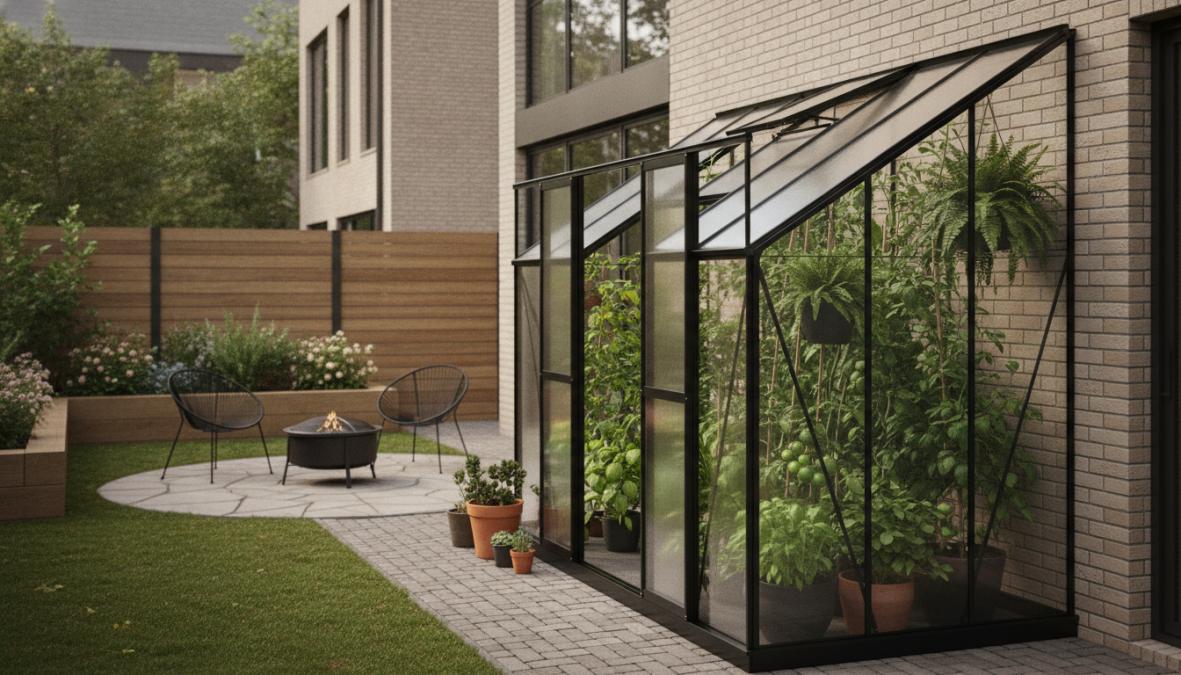
A 6-foot by 8-foot lean-to typically costs 30-40% less than a comparable freestanding structure and takes a weekend to install. Bloomcabin's aluminum mini wall greenhouse exemplifies this category, designed for patios and narrow urban yards while maintaining clean aesthetic lines that complement modern homes.
Why Lean-To Designs Work for Compact Spaces
Lean-to structures use existing walls, reducing your greenhouse footprint by half while maintaining full growing capacity. The wall-mounted approach simplifies ventilation and provides wind protection that freestanding models lack. Many gardeners report 10-15 degrees Fahrenheit of passive heating advantage in spring and fall when positioned correctly.
Polycarbonate vs. Tempered Glass Options
Polycarbonate panels cost 40-50% less than tempered glass and offer superior insulation due to their cellular structure. They're nearly unbreakable, making them ideal for areas with hail or where children play. The trade-off: polycarbonate yellows slightly over 5-10 years and transmits marginally less light (around 88% versus 92% for glass).
Tempered glass delivers crystal-clear light transmission and never degrades visually, but costs significantly more and requires careful handling. A single tempered glass panel replacement can cost $300-800. For small lean-to greenhouses where replacement is feasible, glass works beautifully. For larger structures or high-wind areas, polycarbonate's durability makes it the practical choice.
Rooms Outdoors offers the [6x12 Ft Walk-In Polycarbonate Greenhouse with Sliding Door & Adjustable Roof Vent](https://bnvnsf-db.myshopify.com/products/walk-in-greenhouse-garden-greenhouse-for-outdoors-upgraded-polycarbonate-plant-greenhouse-with-sliding-door-adjustable-roof-vent-6x12ft-te3067) at $569.00, featuring adjustable roof ventilation and a sliding door, essential for managing temperature swings in compact spaces.
2. Polycarbonate Greenhouses: Durability Meets Affordability
Polycarbonate has become the default material for small backyard greenhouses. These structures balance affordability, durability, and practical functionality without the maintenance demands of glass. The Palram-Canopia Harmony 6x8 greenhouse exemplifies modern polycarbonate design: virtually unbreakable UV-protected panels, a rust-resistant aluminum frame, and a built-in gutter system for water collection.
Real-world performance data shows polycarbonate greenhouses maintain structural integrity through multiple seasons of temperature swings and UV exposure. The cellular structure provides R-value around 1.5, meaning you retain heat more effectively than with single-layer glass. In spring and fall shoulder seasons, this translates to 4-6 additional weeks of frost-free growing conditions in many climates.
The trade-off is purely aesthetic. If your goal is growing plants reliably and affordably, polycarbonate wins decisively. The Backyard Discovery Poppy Greenhouse bridges this gap with natural cedar wood framing and polycarbonate roof panels, delivering visual warmth while maintaining durability advantages.
3. Victorian-Style Glasshouses for Aesthetic Appeal
For gardeners who view their greenhouse as a design statement, Victorian-style glasshouses offer timeless elegance. The Exaco Janssens Junior Victorian Greenhouse represents the premium end at $8,799, featuring high-quality tempered glass, aluminum profiles, sliding doors, and roof windows for ventilation. Superior insulation means lower heating costs in winter, and the design supports year-round growing in most climates.
Victorian glasshouses demand more installation complexity and professional help is often required. The financial commitment is substantial, and glass requires periodic cleaning to maintain maximum light transmission. However, a well-maintained Victorian glasshouse lasts 30-40 years. Over a 30-year horizon, the cost-per-year becomes competitive with cheaper alternatives when you factor in replacement cycles.
4. Small Garden Shed Integration: Dual-Purpose Structures
Some of the most practical modern greenhouse ideas combine growing space with storage and workspace. A garden shed with integrated greenhouse sections maximizes the value of limited square footage. One side functions as a potting bench and tool storage area, the other side is a growing space with benches and ventilation.
The advantage emerges during planting season: you're not running back and forth between a greenhouse and a separate shed. Your tools, soil, pots, and seeds are steps away from where you're working. The workspace stays dry and organized. Many gardeners report 20-30% more productive growing seasons because they spend more time in the space.
The shed should be oriented so the greenhouse section faces south (in northern climates) or east (in hot climates). Windows on the shed side provide natural light for the workspace. A shared roof reduces material costs compared to two separate structures. If you're building from scratch, integrating these functions saves 15-20% on total construction costs.
5. Greenhouse Shelving Ideas for Small Spaces
Once you've selected your greenhouse structure, interior organization determines whether you can grow 20 plants or 200. Vertical space is your most valuable asset. Wall-mounted shelving units, tiered benches, and hanging systems transform a cramped space into a productive growing area. The Barrina 6-Tier Greenhouse exemplifies this approach, a portable vertical shelving unit with a zippered cover that maximizes growing capacity in a footprint smaller than a closet.
Vertical gardening works because plants don't need floor space, they need light and air circulation. A 4-foot by 8-foot greenhouse with three-tier shelving provides the growing surface of a 12-foot by 8-foot structure with a single bench.
Vertical Organization and Potting Bench Solutions
The most functional small greenhouses combine vertical growing space with a dedicated potting bench. A narrow potting bench, 24 to 30 inches wide, fits along one wall and provides workspace for seed starting and transplanting. Shelving above holds supplies; shelving to the side holds growing plants. This layout keeps everything within arm's reach and maintains clear floor space for movement.
Juwel's cold frame design demonstrates how compact structures deliver serious growing capacity. At around $299, it provides a protected environment for early-season seed starting. While not a full greenhouse, cold frames solve a specific problem: extending the season for seedlings in minimal space.
Material selection for shelving matters in the humid greenhouse environment. Galvanized metal shelving resists rust better than bare steel. Wood shelves absorb moisture and eventually warp. Wire shelving allows excellent air circulation but requires careful plant placement to prevent water dripping onto plants below.
6. Best Plants for Small Greenhouses: Seasonal Planning
The plants you grow determine your greenhouse's value. A small greenhouse works best when planted strategically for season. Herbs, basil, cilantro, parsley, oregano, deliver continuous harvests in minimal space. Leafy greens, lettuce, spinach, arugula, mature quickly and tolerate crowding. Tomatoes and peppers produce prolifically in controlled greenhouse conditions.
Spring and early summer suit cool-season crops: lettuce, peas, radishes. Mid-summer transitions to heat-loving plants: tomatoes, peppers, eggplant. Fall brings another cool-season window: kale, chard, broccoli. Year-round greenhouse gardening means planning three distinct growing seasons.
Research from University of California Extension on controlled environment agriculture shows that greenhouse growers achieve 3-4 crop cycles per year compared to 1-2 for outdoor gardeners in the same climate. This productivity advantage compounds when you plan seasonally.
7. Small Greenhouse Design Ideas: Climate & Permitting
Your climate determines three critical design decisions: insulation requirements, ventilation strategy, and heating/cooling approach. In cold climates (zone 4 and below), greenhouse design must prioritize heat retention. Double-wall polycarbonate or glass becomes essential. Thermal mass, water barrels or concrete, inside the greenhouse moderates temperature swings.
In hot climates (zone 9 and above), you're fighting excessive heat. Shade cloth, roof vents, and evaporative cooling become critical. Ventilation design matters more than insulation.
Temperate climates (zones 5-8) offer the most flexibility. Moderate insulation, straightforward ventilation, and minimal heating usually suffice.
Automated vent openers, soil moisture sensors, and simple temperature controllers cost $50-300 and deliver significant reliability improvements. A $100 automatic vent opener that opens at 75°F and closes at 70°F eliminates the biggest challenge of small greenhouses: temperature management when you're not home.
Zoning and Permitting for Backyard Structures
Before purchasing a greenhouse, verify your local zoning regulations. Many municipalities require permits for structures over 100-200 square feet or structures within a certain distance from property lines. Contact your local planning department and ask three specific questions: (1) Is a permit required for a greenhouse of your intended size? (2) What setback distance from property lines is required? (3) Are there height restrictions?
Zoning restrictions also affect design. If your property line is 5 feet from where you want to place a greenhouse, a lean-to design might violate setback requirements while a freestanding structure positioned differently complies. Consulting your zoning code before purchasing prevents expensive mistakes.
| Climate Zone | Insulation Priority | Ventilation Focus | Heating Needed | Cooling Strategy |
|---|---|---|---|---|
| Cold (4 & below) | High | Minimal | Yes | None |
| Temperate (5-8) | Moderate | Standard | Optional | Shade cloth |
| Hot (9 & above) | Low | Maximum | No | Evaporative cooling |
The Elite Easygrow Lean-To Greenhouse demonstrates how zoning constraints drive design. Its extremely narrow footprint solves a specific problem: fitting a greenhouse in tight spaces where setback requirements eliminate other options.
Modern greenhouse ideas for small backyards range from ultra-affordable polycarbonate structures to premium Victorian glasshouses, from wall-mounted lean-to designs to integrated garden sheds. The right choice depends on your climate, available space, budget, and gardening intensity. Rooms Outdoors offers premium greenhouse solutions like the [12x8 Ft Walk-In Polycarbonate Greenhouse](https://bnvnsf-db.myshopify.com/products/12x8-outdoor-greenhouse-walk-in-polycarbonate-green-house-with-aluminum-frame-for-backyard-black) at $629.00, featuring a durable aluminum frame and polycarbonate construction designed for reliable growing in small backyards. With free shipping on most orders over $1500 within the continental U.S., Rooms Outdoors makes it effortless to transform your backyard into a productive growing space.
Frequently Asked Questions
What is the best size greenhouse for a small backyard?
The ideal size depends on available space and your growing goals. For most small backyards, a 6x8 to 8x12 footprint offers a good balance. Our 6x12 Ft Walk-In Polycarbonate Greenhouse ($569) fits compact spaces while providing enough room for shelving, a potting bench, and diverse plantings. Lean-to designs can be even more space-efficient, utilizing existing walls. Measure your available area and consider vertical shelving to maximize growing capacity without expanding your footprint.
What are the best plants for small greenhouses year-round?
Small greenhouses work well for herbs (basil, parsley, mint), leafy greens (lettuce, spinach), and compact vegetables (bush beans, determinate tomatoes). Seasonal planning maximizes your harvest: grow cool-season crops in spring and fall, heat-loving plants in summer. In winter, focus on microgreens and cold-hardy herbs. Vertical growing on shelving units lets you cultivate multiple plants in minimal space. Choose compact varieties and succession-plant every 2-3 weeks for continuous harvests.
Do I need a permit for a small greenhouse in my backyard?
Permitting requirements vary significantly by location. Most jurisdictions allow small structures under 120 square feet without permits, but some require approval regardless of size. Check local zoning codes for setback distances from property lines and height restrictions. Lean-to greenhouses attached to your home may have different rules than freestanding structures. Contact your local building department before purchasing to confirm requirements, this prevents costly removals and ensures your greenhouse complies with neighborhood regulations.
What's the difference between polycarbonate and tempered glass for modern greenhouse ideas?
Polycarbonate panels are lightweight, impact-resistant, and affordable, ideal for family gardens and DIY assembly. Our 12x8 Ft Walk-In Polycarbonate Greenhouse ($629) features UV-protected panels that diffuse light evenly. Tempered glass offers superior clarity and aesthetics, making it better for Victorian-style designs, but costs significantly more and requires careful installation. Polycarbonate is more practical for small backyards; glass suits homeowners prioritizing visual appeal and willing to invest in premium structures that serve as focal points.
This article was written using GrandRanker