

How to Clean Granite Outdoor Countertops
Table of Contents
- What You'll Need to Clean Granite Outdoor Countertops
- Daily Cleaning Routine for Granite Outdoor Countertops
- How to Remove Oil Stains from Granite
- Dealing with Outdoor Debris, Pollen, and Grease Buildup
- Best Granite Sealer for Outdoor Use and Sealing Frequency
- Granite Countertop Maintenance Schedule and Seasonal Care
- Cleaning Agents to Avoid and Common Mistakes
- Conclusion
Last Updated: August 12, 2026
What You'll Need to Clean Granite Outdoor Countertops
Before tackling how to clean granite outdoor countertops, gather the right supplies. Using incorrect tools or solutions can etch the stone or strip its protective sealant, leaving your investment vulnerable to permanent damage.
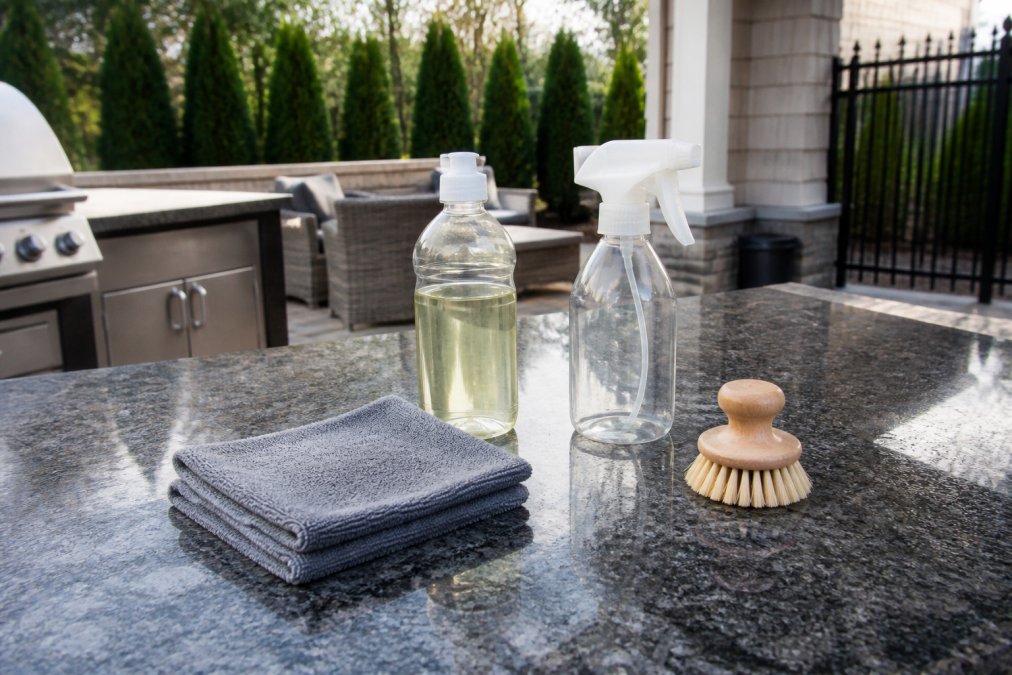
Essential items include a pH-neutral cleaner specifically formulated for natural stone, a microfiber cloth for gentle wiping, warm water, and a soft-bristled brush for debris removal. Avoid anything acidic, abrasive, or ammonia-based, these damage granite's surface finish and compromise the sealer. Many homeowners mistakenly reach for vinegar or lemon-based cleaners, thinking natural equals safe. That's backwards. These solutions etch granite immediately.
You'll also want a granite sealer on hand for regular maintenance. The best granite sealer for outdoor use creates a protective barrier against moisture, staining, and UV damage. Keep buffing cloths available for drying and polishing. If you're dealing with stubborn stains, have poultice powder (a specialized clay-based product) ready, though this is for occasional deep cleaning, not daily use.
For outdoor granite specifically, consider a leaf blower or soft brush to remove pollen and outdoor debris before wet cleaning. This prevents grit from scratching the surface during wiping. A spray bottle makes applying your pH-neutral cleaner easier and more controlled than pouring directly onto the stone.
Daily Cleaning Routine for Granite Outdoor Countertops
Your daily routine protects granite outdoor countertops from the elements and keeps them looking pristine. Start by removing loose debris, pollen, leaves, dust, with a soft brush or leaf blower. This step matters more outdoors than indoors because wind and trees constantly deposit material on your surfaces.
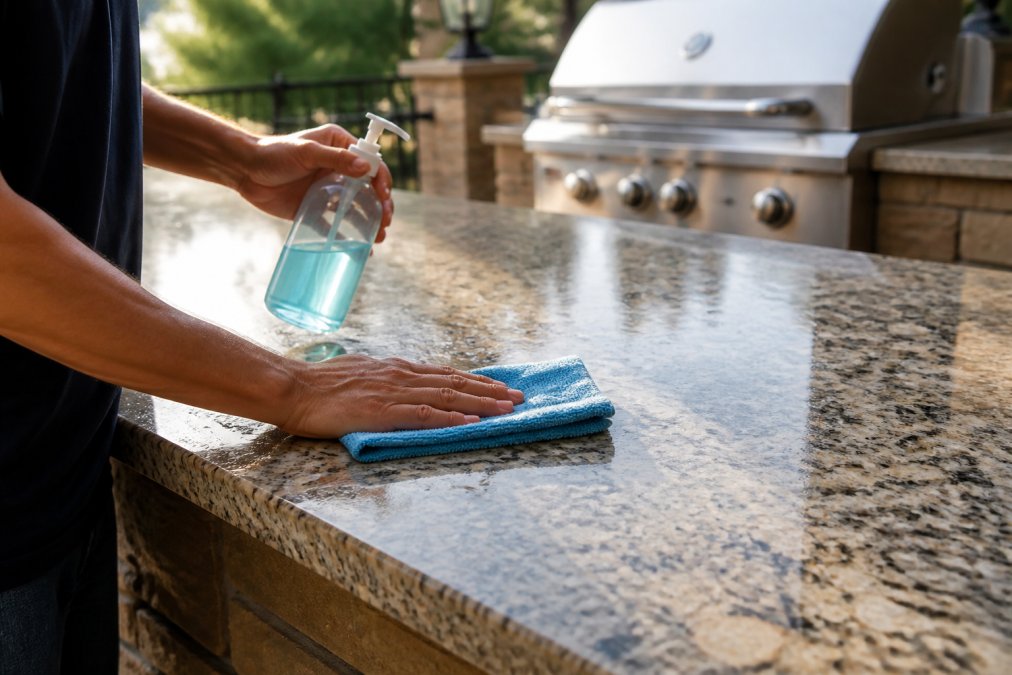
Spray the countertop lightly with warm water and a few drops of pH-neutral cleaner. Don't oversaturate. Excess water sitting on granite can seep into pores and weaken the sealer. Wipe with a microfiber cloth using gentle circular motions. Microfiber is essential here, paper towels and rough cloths scratch the stone's surface finish, creating dull spots that accumulate over time.
Dry immediately with a clean, dry microfiber cloth. This prevents water spots and mineral deposits from forming. Water spots on granite are actually mineral residue left behind when tap water evaporates. They're cosmetic but persistent, so drying is non-negotiable.
For outdoor countertops, this routine should happen at least twice weekly, or more frequently if you entertain often or live in a dusty climate. After cooking or food prep, wipe down the same day. Don't let grease or food residue sit overnight, it can stain porous areas and attract insects.
The difference between granite that looks new after five years and granite that looks weathered is consistency. One quick wipe daily beats three frantic scrubbing sessions monthly.

How to Remove Oil Stains from Granite
Oil stains penetrate granite's porous structure and won't respond to surface cleaning. The stone absorbs oil before you realize it's there, which is why prevention through regular sealing matters so much.
If you've already got an oil stain, here's the approach: First, identify whether it's fresh or set. Fresh stains (less than 24 hours old) sometimes respond to immediate blotting with paper towels followed by a pH-neutral cleaner. Don't wipe, blot gently to lift the oil without pushing it deeper.
For set stains, poultice is your tool. A poultice is a paste made from clay-based powder mixed with water or a solvent. It draws oil and other contaminants out of the stone over 24-48 hours. Mix the poultice according to package directions, apply a thick layer directly over the stain, cover with plastic wrap to keep it moist, and let it sit. As it dries, it pulls the stain upward. This works because the clay has a strong affinity for oils, it's literally pulling the stain molecules out of the granite's pores.
Rinse thoroughly with distilled water after the poultice dries completely. Tap water contains minerals that can leave residue. For stubborn stains that poultice doesn't fully remove, you may need a professional restoration service. Attempting aggressive scrubbing or chemical solvents yourself risks etching the stone permanently.
Prevention is simpler than removal. Seal your outdoor granite countertops annually (more frequently if you cook outdoors regularly). A proper sealer fills the pores and prevents oil from penetrating. Even sealed granite can stain if oil sits for extended periods, but sealed stone gives you time to clean before absorption occurs.
Dealing with Outdoor Debris, Pollen, and Grease Buildup
Outdoor granite faces unique challenges that indoor countertops never encounter. Pollen accumulates year-round, outdoor debris gets tracked onto surfaces, and grease from grilling cakes on the stone if not managed.
Pollen appears as a thin, yellowish film that dulls the granite's finish. It's not just cosmetic, pollen particles are slightly acidic and can etch the sealer if left to sit. Remove pollen weekly with a soft brush and warm water. A leaf blower works beautifully for this task and avoids the moisture of wet cleaning when pollen is the only issue.
Outdoor debris, leaves, twigs, dirt, should be cleared daily, especially after wind or rain. Wet debris left sitting can stain granite and promote mold growth in shaded areas. Use a soft brush or cloth to remove debris before it has time to stick or leave marks.
Grease buildup happens around outdoor kitchen islands and grills. Cooking spatters and smoke residue accumulate on surrounding surfaces. Address grease immediately after cooking. Use your pH-neutral cleaner and a microfiber cloth, never a scouring pad. Grease that hardens becomes much harder to remove and can eventually etch through the sealer if it sits long enough.
For stubborn grease buildup that's been there for weeks, a specialized stone degreaser (pH-neutral) may help, but test it on a hidden area first. Some commercial degreasers contain ingredients that can dull granite's finish or damage the sealer. When in doubt, stick with your standard pH-neutral cleaner and patience.
The seasonal transition between fall and spring is critical. Falling leaves and pollen spike during these periods. Increase your cleaning frequency temporarily. Spring rains can also trap pollen and debris on the surface, so wipe down after rain passes.
Best Granite Sealer for Outdoor Use and Sealing Frequency
The best granite sealer for outdoor use must withstand UV exposure, moisture, and temperature fluctuations without breaking down. Not all sealers are created equal. Indoor sealers often fail outdoors because they can't handle constant sun exposure and weather cycling.
Look for a sealer labeled specifically for outdoor use. The product should be penetrating (soaks into the stone) rather than surface-forming (sits on top). Penetrating sealers protect the stone from within without creating a visible coating that can peel or wear unevenly. Outdoor granite exposed to sun develops a natural patina, a sealer should enhance this, not fight it.
Sealing frequency depends on your climate and use intensity. In moderate climates with occasional entertaining, reseal annually. In harsh climates with intense sun, heavy rain, or frequent temperature swings, seal every 6-9 months. If you use your outdoor kitchen daily during warm months, seal twice yearly.
Test your sealer's effectiveness with a water droplet test. Drop water on the granite. If it beads up and rolls off, the sealer is working. If it soaks in and darkens the stone, resealing is overdue. This simple test takes 10 seconds and tells you everything.
When resealing, clean the granite thoroughly first. Any dirt or residue trapped under the sealer will be locked in and visible. Allow the stone to dry completely before applying sealer, typically 24 hours after cleaning. Follow the sealer manufacturer's instructions for application and drying time. Most outdoor sealers require 48-72 hours of curing before the countertop is fully functional again.
For homeowners investing in premium outdoor kitchen islands like the 46" 4-Burner Outdoor Kitchen Island with Black Stainless Steel and Granite Countertops, sealing is non-negotiable. These high-end installations deserve the protection that proper sealing provides. Rooms Outdoors recommends using a premium outdoor granite sealer rated for continuous exposure, applied immediately after installation and maintained annually.
Granite Countertop Maintenance Schedule and Seasonal Care
A maintenance schedule prevents small issues from becoming expensive repairs. Think of it as preventative medicine for your stone.
Monthly: Inspect the granite for new stains or etching. Look for dull spots, discoloration, or areas where water no longer beads. These are early warning signs that the sealer is degrading or damage is developing.
Quarterly: Deep clean with a pH-neutral stone cleaner. This goes beyond daily wiping, use a soft brush to gently scrub the entire surface, paying special attention to corners and edges where debris accumulates. Rinse thoroughly and dry completely.
Annually: Reseal the granite. This is your most important maintenance task. Sealing creates the barrier that protects against staining, etching, and moisture damage. Mark this on your calendar and don't skip it, especially for outdoor granite.
Seasonal care addresses specific challenges each season brings.
Spring: Pollen and new growth mean increased debris. Increase cleaning frequency to weekly. Check the sealer with a water droplet test. Spring rains can expose weak spots in the sealer, so this is a good time to reseal if the test shows saturation.
Summer: UV exposure peaks. If you use your outdoor kitchen frequently, monitor for any signs of sealer breakdown. Grease and food residue from grilling increase. Wipe down after every use, not just daily. Consider a mid-summer sealing if you're in an intense sun climate.
Fall: Falling leaves and pollen spike. Increase cleaning frequency again. Prepare for winter by ensuring the sealer is fresh and intact. If winter temperatures in your area drop below freezing, proper sealing becomes critical, water that penetrates the stone can freeze, expand, and crack the granite.
Winter: In freezing climates, minimize water exposure. Avoid wet cleaning during extremely cold periods. If you must clean, dry immediately and thoroughly. Snow and ice can trap moisture against the stone. Clear snow promptly rather than letting it melt and refreeze repeatedly.
In moderate climates, winter is actually the easiest season for granite care. Reduced entertaining and outdoor use mean less grease and debris. Focus on keeping the surface clean and dry.
Cleaning Agents to Avoid and Common Mistakes
Understanding what NOT to use is as important as knowing what to use. Many homeowners damage their granite with products they thought were safe.
Never use vinegar, lemon juice, or any acidic cleaner. These etch granite instantly, creating dull spots that are permanent. The damage happens quickly, you might not notice for a few minutes, but by then the stone's surface is compromised. Acidic cleaners strip the sealer and eat into the granite itself.
Avoid bleach and ammonia-based cleaners. These are harsh enough to damage the sealer and can discolor granite over time. They also leave residue that attracts dirt.
Don't use abrasive pads, steel wool, or rough brushes. These scratch the surface and dull the finish. Stick with soft-bristled brushes and microfiber cloths exclusively.
Avoid oil-based polishes marketed for granite. Many contain wax or silicone that builds up over time, creating a cloudy, sticky surface that's harder to clean. Your sealer should provide all the protection and sheen you need.
Don't let spills sit overnight. Even sealed granite can stain if liquid sits long enough. The longer something sits, the more likely it is to penetrate the sealer and stain the stone. Immediate cleanup prevents 90% of staining issues.
A common mistake is over-sealing. Applying sealer too frequently or too heavily creates buildup that looks streaky and feels sticky. Follow the manufacturer's instructions exactly. More sealer doesn't mean more protection, it means wasted product and a compromised finish.
Another mistake is using hard water for rinsing. Hard water leaves mineral deposits that create water spots. Use distilled water for final rinses, especially after deep cleaning. This costs pennies and makes a visible difference.
Don't assume all stone cleaners are safe for granite. Some are formulated for marble or limestone and will damage granite. Always check the label. It should explicitly state it's safe for granite or natural stone.
Mixing cleaners is dangerous. Never combine different cleaning products. Chemical reactions can produce toxic fumes or create solutions that damage the stone. Stick with one pH-neutral cleaner and water.
Conclusion
Maintaining granite outdoor countertops requires consistency, the right products, and understanding what protects versus damages the stone. Daily wiping with pH-neutral cleaner and a microfiber cloth, annual sealing, and seasonal adjustments to your routine keep the granite looking beautiful and performing well for decades.
If you're investing in premium outdoor living spaces, proper granite care protects that investment. Rooms Outdoors curates high-end outdoor kitchen islands and countertop solutions designed for homeowners who prioritize durability and aesthetic excellence. Our 46" 4-Burner Outdoor Kitchen Island features genuine granite countertops paired with professional-grade stainless steel components, built for both entertaining and longevity. Shop the collection today and create the outdoor retreat you deserve, then maintain it with the knowledge you've gained here.
Frequently Asked Questions
Is Dawn dish soap safe for granite outdoor countertops?
Yes, mild dish soap like Dawn is safe for granite when used properly. Mix a few drops with warm water to create a pH-neutral cleaning solution. Avoid using excessive soap, which can leave residue on the porous stone surface. Always rinse thoroughly with clean water and buff dry with a microfiber cloth to prevent water spots and maintain the granite's natural finish.
How often should I seal my outdoor granite countertops?
Most granite countertops need resealing every 1-3 years, depending on climate and usage. Outdoor granite experiences more exposure to UV rays, moisture, and temperature fluctuations, so annual sealing is often recommended for outdoor kitchen islands and countertops. Test your sealer's effectiveness by sprinkling water on the surface, if it beads up, the sealer is still protecting the stone. If water absorbs, it's time to reseal.
What household products should I avoid on granite?
Never use bleach, ammonia, vinegar, lemon-based cleaners, or abrasive pads on granite. These harsh chemicals cause etching, which dulls the surface finish and damages the countertop integrity. Avoid WD-40 and Clorox wipes, which leave residue and can strip the granite sealer. Stick to pH-neutral cleaners specifically formulated for natural stone to preserve both the appearance and protective sealing.
How do I remove stubborn oil stains from outdoor granite?
For fresh oil stains, blot immediately with a paper towel, don't wipe. For set-in stains, use a poultice made from baking soda and water to draw out the oil. Apply the paste, cover with plastic wrap, and leave for 24-48 hours. For grease buildup, use a stone-safe degreaser or a few drops of mild dish soap with warm water. Always test any cleaning agent on an inconspicuous area first to ensure it won't damage the sealer.
This article was written using GrandRanker